
Tag: eye exam

vision problems in children

Vision Issues Can Affect Learning in Children

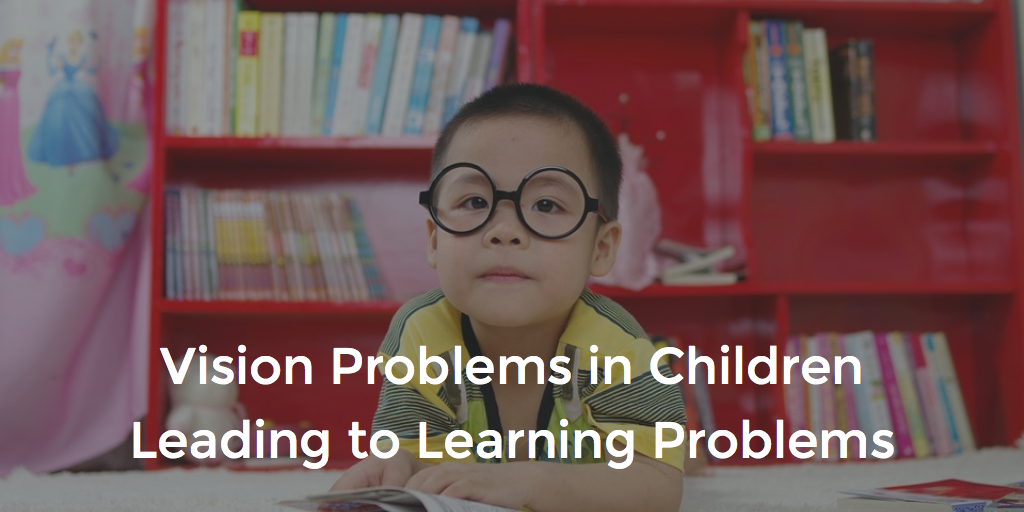
It’s estimated that up to 80 percent of learning occurs through a child’s eyes. But what happens when a preschooler or early grade school child has vision problems such as hyperopia, also known as farsightedness? If you are farsighted that means you can see far away, but you have trouble focusing on things that are up close. For a farsighted child in a classroom that means they have trouble focusing on close-up items, such as a book or computer screen. Learning to read and write is visual. Reading and writing skills are learned very early on in a child’s school years.

Do you know if your young child is farsighted? Do your young child’s teachers recognize if he or she is farsighted? Hyperopia is often undiagnosed without a proper eye exam by an optometrist. School exams may not catch hyperopia. If it was not known that your child had vision problems then it could certainly affect your child’s learning and development, in particular learning of reading and writing skills. The Boston Globe reports “even moderate uncorrected farsightedness in four- and five-year-old children significantly affects early literacy skills, according to” the findings of a 492-child study published in the journal Ophthalmology and supported by the National Eye Institute. The study’s findings indicate, “An untreated vision problem can delay a child’s grade school readiness, says lead author Marjean Kulp of Ohio State University’s College of Optometry.”

Hyperopia can not only affect your child’s academic success, it also can affect a child in the classroom in a more physical way by causing fatigue, tension, and discomfort. Learning can become difficult and stressful for a child. The inability to see well can create a short attention span in the classroom or when completing homework. Your child may even flat our refuse to do schoolwork due to frustration.

All of this frustration for your child can be avoided by a simple eye exam by an optometrist! Envision Eyecare can determine if your child is nearsighted or farsighted and either condition can be corrected. Regularly scheduled exams are important as a child’s vision can change throughout the years. The AOA recommends a child visit an optometrist every 2 years, unless of course there is a condition that allows for more frequent visits. Please discuss with your eye doctor and follow their recommendation.
Free Eye Exam for Infants at Envision Eyecare

Envision Eyecare participates in a wonderful program called InfantSEE, a public health program that allows us to provide a comprehensive eye assessment to children between the ages of 6 and 12 months as a no-cost public service. This program is managed by Optometry Cares of the American Optometric Association Foundation. According to Optometry Cares, the program is “designed to ensure that eye and vision care becomes an essential part of infant wellness care to improve a child’s quality of life.”

It is extremely important to schedule an early eye exam for your baby’s health and development. Your child’s eyes are developing, his or her eyes and brain are learning to see, all of which is helping your child to learn and develop. Proper or improper eye development is not necessarily something that can be recognized by a parent. Your baby’s vision is huge in developing coordination and motor skills, recognition, stimulation, and so much more at such an early age. Learn more about how an infant learns to see and the steps of eye development. An optometrist can also help you determine how to visually stimulate your child and help his or her vision develop properly. According to the AOA, by two years of age, a child’s eye-hand coordination and depth perception should be well developed.

The other unfortunate fact is that many eye conditions have no symptoms that can be identified by a parent or even a routine check-up by a family physician. A more detailed exam by an optometrist can in fact catch these eye conditions that can be treated or corrected early on in your child’s life. With some conditions, your child’s vision can be corrected, in the worst case scenarios it can be saved. The hard facts according to the AOA are that of the 3 to 4 million babies born every year in the United State, 1 in 20,000 has retinoblastoma (eye cancer), 1 in 25 will develop strabismus (commonly known as crossed eyes), and 1 in 30 will develop amblyopia (or lazy eye).

At your infant’s first eye exam Envision Eyecare will test for excessive or unequal amounts of nearsightedness, farsightedness, or astigmatism. We will test for eye movement ability and eye health problems. These tests will not be invasive for your child. Don’t worry; our Envision Team is experienced with children of all ages. Helping ensure your child’s development and quality of life brings us great joy!

Schedule your infant’s comprehensive eye exam with us, compliments of InfantSEE!

eye exam using insurance benefits

Insurance Benefits for Eye Health Exam

DON’T WAIT! Be sure to schedule your eye health exam before the end of the year to maximize on your Vision Insurance Plan savings! Most vision plans offer one comprehensive eye health exam per year along with any benefits for frames, lenses or contact lenses. Don’t miss this money-saving opportunity for you and your family members! Please note that Envision Eyecare gets extremely busy the last few weeks in the year for this reason. The earlier you can book your appointment with us the better in order to make sure we can see you in a timely manner before the year’s end.

Also, FSA (Flexible Spending Accounts) and HSA (Health Savings Accounts) funds may not roll over for use year-to-year. If you have funds available then now is the time to use them. Contact your insurance provider if you have questions about your vision insurance plan.

Call Envision Eyecare at 828-254-6757 to schedule your eye health exam and take advantage of your insurance benefits this year.

eye disease macular degeneration

Age-Related Macular Degeneration Awareness Week

Our eyes matter. It’s the truth and it’s also the theme of AMD Awareness Week. AMD stands for Age-related Macular Degeneration. Here are the facts about AMD.

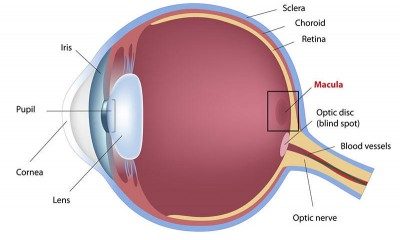
Age-related Macular Degeneration is an eye disease that is the leading loss of vision for people age 50 and older. Now it doesn’t necessarily cause complete blindness since it affects the macula in the center of your eye. The macula is a small spot near the center of your retina. This is where you have the sharpest vision. AMD can cause a blind spot or blurriness which can affect your ability to see, read, perform tasks, or drive.

Age-related Macular Degeneration is more likely to occur after 60 years of age. Other factors are smoking, race, high blood pressure, high cholesterol, obesity, poor diet and high sun exposure. Smoking has been shown to double the risk of AMG. Caucasians have a higher incidence of AMD. It is genetic so if your family has a history of AMD, you should have regular comprehensive eye exams.

AMD can be diagnosed by regular eye exams. Early diagnosis can help prevent or reduce loss of vision. The early stages of AMD may have little to no symptoms so it’s important to see your eye doctor. Symptoms may not occur until later stages of the disease or becomes noticeable when vision in one or both eyes are affected.

For more information about age-related macular degeneration and info about treatment, visit the National Eye Insitute.