
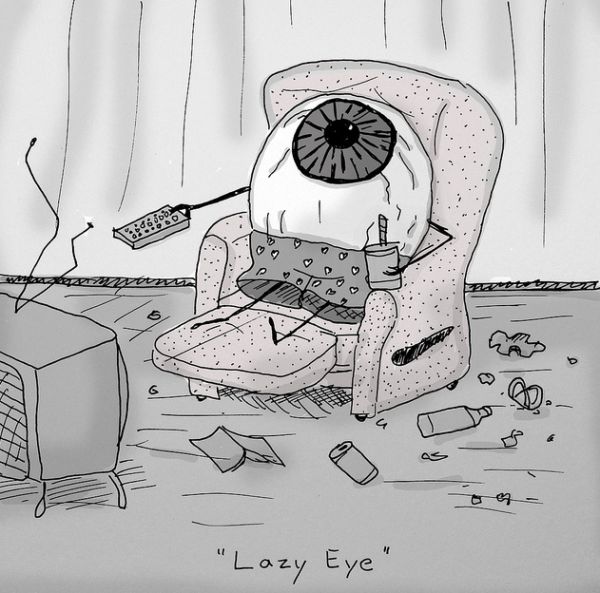
To Be Or Not To Be Lazy…
The truth about that “lazy eye.”
There is so much conversation that happens around the topic of “lazy eye,” also known as amblyopia, we thought we should take a little time to clarify some points and highlight a few others. Despite popular belief, for starters, ‘lazy eye’ can happen in both eyes and not just one. In truth of the matter is the term lazy eye is inaccurate as the condition is caused by a development problem in the brain and not the eye.
 The truth is amblyopia is a brain thing and not a ‘lazy eye’ issue at all. For instance, if one eye hasn’t had the opportunity to develop fully or as well as its counterpart, the brain will ultimately work harder [over compensation] to use the ‘good eye’ over the ‘lazy eye.’ When detected in early childhood, often times wearing a patch solves the problem straight away. However, it is not the only means of treating ‘lazy eye.’ Consulting with your eye doctor is always the best route to take when you have questions or notice early signs of this condition in your child.
Nevertheless, it’s always good to have a little information in your back pocket when you begin researching and delving into this process of uncovering “the truth about lazy eye” and all the ways it may or may not affect your child’s life. We thought we’d help by give you a little head start.
A few things to keep in mind when discussing ‘lazy eye’:
- it is a condition that develops from an early childhood when one eye does not develop properly
- ‘lazy eye’ can actually happen in both eyes though one will be weaker than the other
- wearing an eye patch alone is not the only form of rehabilitating the eye
- blurred vision, double vision and lack of eye coordination are signs of ‘lazy eye’
- a combined effort of vision therapy and wearing a patch is an optimal form of treatment
- amblyopia and strabismus [crossed eyed] are not the same thing
- it is not true that once a child reaches adulthood ‘lazy eye’ is untreatable
Remember, making sure your child’s annual eye exam is a regular occurrence is one way to keep an eye out for an early warning signs. As with most things in life, knowledge is power and empowering your child’s precious sense of sight is priority! At least that’s what we think here at Envision.