Order Contacts Online With Us!

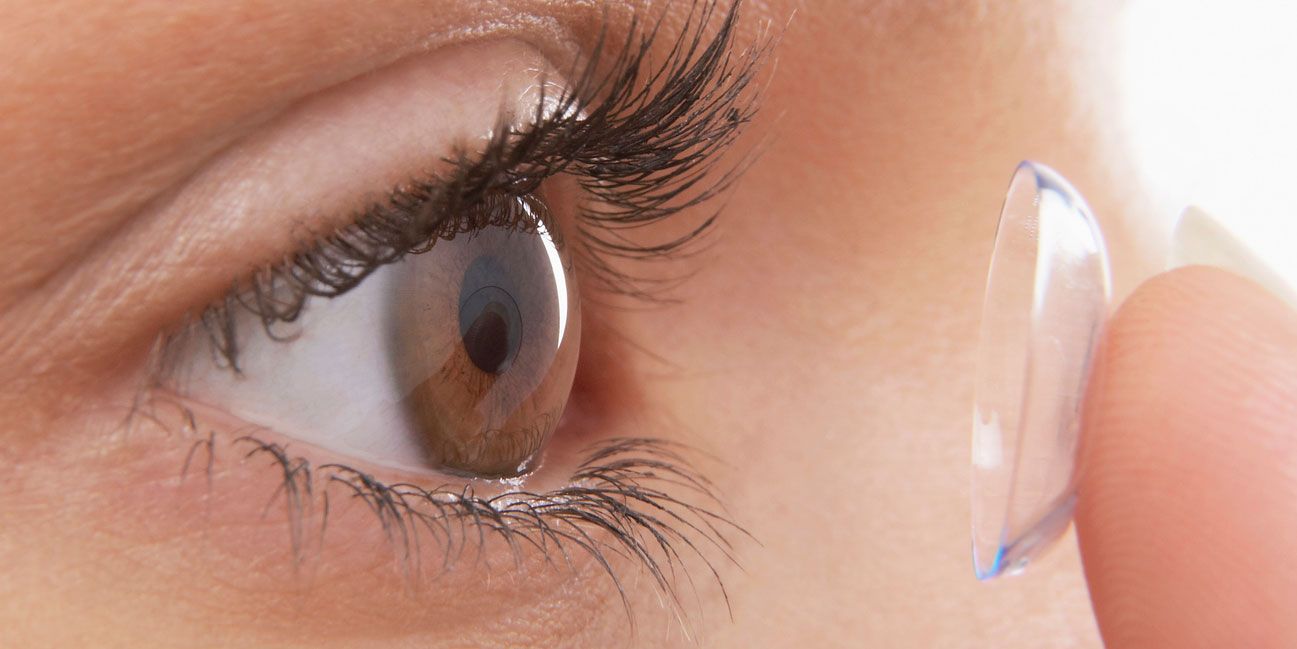
Supporting local businesses during this time of uncertainty is critical. Here at Envision Eyecare, we are adapting to our ever changing world. We now offer ordering your contact lenses through our website!

How to order your contact lenses online:

  1. Access https://www.myenvisioneyecare.com/ and scroll to the bottom of the page, and click the section labeled as “Order Contacts” 
  2. Create an account with an email, first & last name, DOB, an approved username & password.
  3. Once the order is placed, please be mindful that there is a 1-2 business days pending approval before the order can be processed, to ensure authorized and valid contact lens prescriptions.
  4. If there are any issues, you will be contacted by an Envision Eyecare team member.

Please allow 1 week after your order is placed to receive your contacts. If your contact lens prescription is expired, at this time we are allowing patients to order a 6 month supply through our office to hold over until we are open for normal care.

We appreciate your continued support! 

Envision Eyecare Receives Outstanding Dry Eye Practice Award

At Eye Eco we are dedicated to finding solutions that provide relief from dry eyes, and we’re not the only ones.

Dry eyes affect more than 40 million Americans, but less than 5% of people have been properly diagnosed with Dry Eye Disease. Dry Eye Disorder can cause many health issues including obscured vision, dry skin, and even blindness. It can be caused by many things – including time looking at screens. For most of us that activity isn’t going away anytime soon.

At Eye Eco, we believe the best thing that can be done to keep eyes healthy and comfortable is regular visits to an eye care professional.

Because dry eye can have several causes, figuring out the cause is an important step in finding the best treatment option. Optometrists and Ophthalmologists do incredible work to make sure we can clearly and comfortably see everything in our lives.

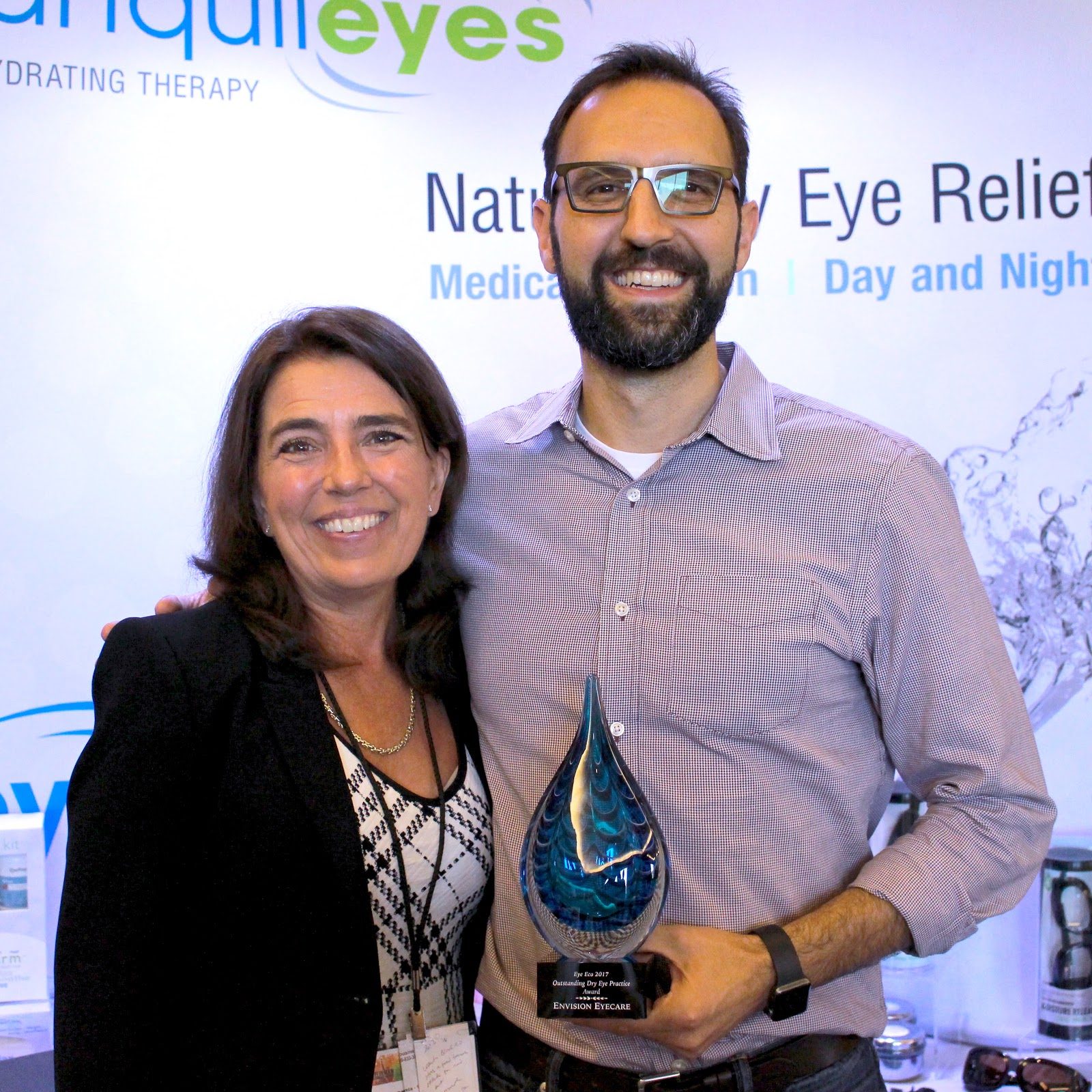
Envision Eyecare receives the Outstanding Dry Eye Practice Award

From left to right: Suzanne Paulson of Eye Eco, Dr. Larry Golson

We want to highlight some of the doctors who are as committed as we are to helping dry eye patients find relief. That is why we are starting a new campaign to acknowledge doctors by presenting them with Eye Eco‘s Outstanding Dry Eye Practice Award.

Envision Eyecare in Asheville, North Carolina, is one of our first recipients of the award. Here’s what Dr. Larry Golson had to say about receiving the award and about treating patients with dry eye.

What were your thoughts when Envision Eyecare received the Eye Eco Outstanding Dry Eye Practice Award?
We were really excited to get the award. We devote a good deal of our resources into treating dry eye. The Envision Eyecare team is trained on the condition as well as the many different treatments available. Then, after a comprehensive eye health evaluation, we design treatment plans for our patients individual needs. Finally, we spend adequate time educating out patients on his/her treatment plans and the products we are prescribing. We find our patients “buy in” and are more likely to be compliant when they understand their condition and why they’d benefit from the treatment. We have dry eye products on display in our reception area so patients are aware of the level of care we provide in this area. Our doctors research new technologies and then invest in the ones which will have the most benefit to our community of patients. We were surprised and honored when we received Eye Eco‘s Outstanding Dry Eye Practice Award, as we are grateful to receive recognition for our care in this area.

Please tell us a little about Envision Eyecare:
Envision Eyecare opened in 2008 with two employees in Asheville, North Carolina. We understand the difference between eye care which is executed as a transaction, versus personalized eye care. Therefore, the focus is on personal eye care because we believe in living life to the fullest through the best eyesight and health. We take the time to educate our patients to ensure they leave with an in depth understanding about their eyes and the condition of their eyes. The Envision Eyecare Experience is provided in a beautiful space with well trained team members so our patients can gain a sense of what sets us apart from conventional eye care.

Do you have a story you can share about how your practice helped a patient(s) find relief from dry eyes? Please share.
We had a patient who had been suffering for years from debilitating dry eye. She was a local acupuncturist who had rheumatoid arthritis and Sjögren’s syndrome, which she was treating holistically with acupuncture. Since she wasn’t getting her dry eye symptoms under control, she was willing to try anything to get relief from her dry eyes.

After trying several treatment modalities, a huge improvement was derived from the Lid Pro and Meibo Pro devices in conjunction with lid scrubs, artificial tears, and warm compress goggles. We were able to get her dry eye symptoms under control for the first time in over a decade. At one point, she actually texted me personally and said, “This is the best my eyes have felt, ever!”

What advice or tip do you have about treating patients with dry eye?
Many of our patients have become accustomed to having dry eye and don’t realize there’s an issue. Every person’s dry eye symptoms are different and there are many causes. It could be environmental, medication use, associated with a systemic condition or due to lifestyle habits. For instance, do they get enough sleep; do they drink enough water? Could the problem stem from too much caffeine or alcohol intake. Ask how often and for how long are they using devices on a daily basis. Look at their medications and consider medical conditions. Also age and gender demographics plays a role in who’s at risk for dry eye syndrome. Good dry eye care starts with asking enough questions and asking the right questions. Then really take time to develop a customized plan for the individual. Some patients just want to do the minimum and other patients will want to try everything. Compliance is key to success, so make sure the patient understands how important it is to follow the prescribed treatment plan.

Lastly, invest in products to help your patients, both retail and treatment devices. If you have the retail products on-hand (instead of sending them to the pharmacy) there is a higher chance of compliance using the highest quality products. It’s also convenient for the patient and adds to the practice’s revenue. Show them how to use the products and make sure they leave with a firm understanding on how to achieve relief. It’s amazing how grateful these patients become once relief is achieved.

What advice do you have for someone who is experiencing dry eye?
So many patients think their eyes are normal and don’t realize they are suffering from dry eye. It’s not until a doctor asks the right questions or has the right clinical assessment for the diagnosis to be made. Find a practice that takes the time to sit down with the patient to get the right info. So often the exam is rushed, which doesn’t allow time to assess the condition and adequately explain a treatment plan.

Is there anything else you’d like to say about Envision Eyecare, this award, or dry eye and treatment?
Dry eye treatment is a dynamic field and advances in treatment protocols are constantly being developed. It’s easy for eye doctors to get in a place in their head where they think, ‘I am so tired of hearing about this.’ Could I possible sit through another dry eye lecture or article? It is important to look at dry eye treatment with a ‘beginner’s mind.’ Look at it as though it’s something you’ve never seen before. Educate yourself on the new products and technologies. It is an opportunity to help a huge patient population and differentiate yourself from the competition.

At Eye Eco, we are very fortunate to be able to work with some of these passionate helpful people who are improving the lives of others. We plan to highlight more of these practices that are dedicated to providing relief. If you have a recommendation for a recipient of the Outstanding Dry Eye Practice Award, please send us an email at [email protected].

Innovations in Contact Lens Technology

Innovations in Contact Lens Technology


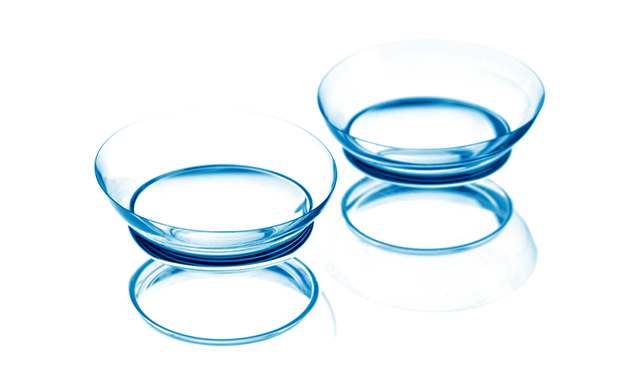
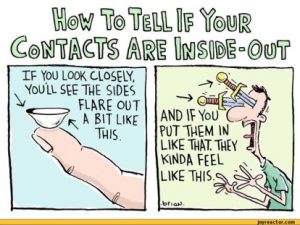
Contact lenses are medical devices that can improve vision, add convenience to activities, and bandage an injury to improve comfort and aid healing.  It is very important to have a contact lens evaluation to make sure your eyes are healthy enough to wear them comfortably without damaging the ocular surface, and to ensure the contact fits your eye properly.  There have been many advances in contact lens technology over the last decade to enhance comfort, breathability and vision demands.  We will discuss the different types and modalities of contact lens, wear time schedules, and the benefits of utilizing new technology to expand the demographic of eligible contact lens candidates.

The majority of contact lens wearers are in soft contact lenses.  These lenses are available in daily disposable, 2 week disposable, and 1 month
disposable wear schedule regimens.  Daily disposables are the healthiest option with improved convenience and comfort.  The cost difference is negligible when the consideration of solution cost is no longer needed with daily disposables.  Also, the packaging is recyclable, except the foil.

When the eye is not completely round and has an oval curvature, it is termed astigmatism.  In order to correct astigmatism with contacts, we must use a toric contact that is larger in diameter and must be orientated properly to provide adequate vision.  Different designs of toric lenses are available for different shapes of the eye to provide the best vision and comfort.   

Hard contacts are usually indicated for irregular corneal shapes and can be initially uncomfortable.  For those who find hard lenses unbearable, a blended(soft and hard) contact or scleral contact lens can be a valuable alternative to treat corneal diseases that cause irregularity.  

As we age, the ability to see up close slowly diminishes and a different modality of contact lenses are necessary.  Three main choices are multifocals, monovision and distance vision only with readers over the contacts as needed for near vision tasks.  Multifocals are the best option to try first because it provides seamless vision from distance to near, but is pupil size dependent so these do not work perfectly for everyone.  Monovision is when we fit the dominant eye for distance and the non-dominant eye for reading.  This seems like it would create imbalance or eye strain, but works very well for the majority of people who are not comfortable with multifocals.  These two modalities can be modified and used in combination dependent on patient visual demand.  If neither of these options is adequate, correcting the distance vision with the use of readers
over the contacts is a last resort.

Ortho-keratology is the science of using hard contacts during sleeping hours to gently change the curvature of the eye overnight, so no correction is needed during the day.  The initial comfort is sometimes an issue, but improves over time.  This has been implicated in reducing the progression of nearsightedness in the adolescence.   

Newer innovations in contacts have become exciting for other demographics as well.  A brand new lenses has been released specifically geared for the avid device user to reduce computer fatigue and enhance performance.  Also, bluetooth technology incorporated in the contact is on the horizon to monitor eye pressure and blood glucose, in order to better manage glaucoma and diabetes.

The Next Best Thing To X-Ray Vision!

Superman had X-ray vision. You can have blue-ray vision. You blutechmight not be able to see through walls, but you’ll be able to see in the next few decades to come.

It’s been dubbed the “lens of tomorrow” by many and no wonder given the advancement in technology and the powerful protection it provides. For starters, you’ve most likely not heard of BluTech before and if you did then you’re definitely one of the few. With summer in full speed mode, this is something you’ll want to have in your “arsenal” to navigate your way through hot, humid, and bright adventures that still have your name written on them.

What is BluTech and what’s the big deal?

BluTech lens technology fits high-energy blue and ultra-violet light using ocular lens pigment derived from auto-oxidation of 3-hydroxykynureine (scientifically known as 3-OHKyn).  It is then combined with melanin and isolated in a durable material that is then used in an optical lens. This partnership allows the same protection for your eyes, contrast enhancement, and color perception to the eye as the natural coloration of the human crystalline lens.

So, what does that mean in laymen terms? We’re glad you asked. To keep it simple, these lenses not only help protect your eyes from the UV-rays but it also protects your vision from the electronic rays emitted from all the gadgets you carry around with you tethered on an invisible leash; think iPad, iPhone, Android, Laptop to label a few.

Why is it a good idea to consider getting BluTech lenses?

Given the fact you are exposed to “blue light” every day [think fluorescent lighting, electronic screens, [phones, tablets, computers, TV’s, etc], and the sum of them all emit damaging high energy blue light. With BluTech lenses, you are given an added extra layer of protection that goes a long way. Blue Lenses are barely noticeable with just a hint of tint to the lens.

*Note:  Those who are light-colored hair, eyes, and skin and those over the age of fifty are at high risk due to the insufficient amounts of protective pigments in the eye. Also, if you’ve had cataract removal surgery you are also at high risk.*

Contact Envision Eyecare to ask about BluTech Lenses. It will make a difference in protecting your precious sense of sight today and for all your tomorrows.

Importance of Back to School Eye Exams

back-to-school-kid3

Although it’s common to think of your GP when you think of back-to-school exams, making certain your child is scheduled for their annual eye exam is now right there at the top of the list.  According to reports, more than half the children who get labeled “problem learners” are actually not. These children genuinely are misdiagnosed, something a routine exam could fix.


Often times a child’s lack of participation or initiation in the classroom can be the result of poor vision.  Children have a tendency to hold objects extremely close to their eyes or experience squinting to see the blackboard or prime candidates for an eye exam. Reports have already indicated one in every five children entering kindergarten walk into school with undetected vision problems.

With the challenges the children of today face, learn is already hard work, this is one area all parents can help that learning curve shorten just a little.

Some signs parents can watch for are:

  • In ability to read a few sentences at a time without tearing
  • Squinting constantly
  • Holding objects extremely close to the face
  • Reading letters and numbers backwards or out of place
  • Physical complaints of headaches or eye aches
  • Losing their place when reading lines in a book
  • Constantly having to sit up close to the TV at home or in the first row in school
  • Covering one eye to read the board or watch TV
  • Difficulty with sports


These are just a few of the common signs your child most likely is experiencing some vision issues. A quick call to your eye doctor, schedule an appointment and you are well on your way to empowering your child’s learning experience.  With children being misdiagnosed with ADD, due to undetected vision challenges, it’s always best to be safe than sorry.

Have you scheduled your child’s eye exam for the upcoming year?

CONGRATULATIONS Dr. Melanie Denton

ostella bistroAs with all things in life, great things come to transition; not necessarily an end. On that note join us in saying…

CONGRATULATIONS to Dr. Denton!

It is with great pride we announce Dr. Melanie Denton will be leaving Envision Eyecare. Dr. Denton’s excellent care over the past three years at our office has touched many in our community and helped to make a difference in providing you with excellent patient care.

Please join us as we wish her the best as she begins the next phase of her journey at her new practice outside of Charlotte, NC. She will be missed.

Dr. Denton’s departure will be followed by the arrival of Dr. Sarah Arnette, OD, who comes to us from Virginia with five years’ experience. Dr. Arnette’s arrival ensures the continuity of Envision Eyecare’s commitment to community, connection and care.

10 Foods That Can Help Improve Your Vision

Hopefully most of us have made it through allergy season with our mental and well-being in tack – not to mention our visuals as well.  It’s been a rough road to recovery with piles of tissues, bottles of nasal sprays, vials of lubricating eye drops for those dry eyes.  And as usual, the schedule for eye appointments always peaks right around allergy season time here at the office.

Your VisionIf there is one thing we locals in Asheville know is one the best remedies for combating allergies, it’s the fact you must eat the local honey!  It’s pretty much common knowledge the local honey infuses your body with the necessary antibiotics to fight off or minimize allergies. Isn’t it funny how we’re quick to access this local wisdom when it comes to something as common as allergies, but when it comes to knowing what you can eat to prevent dry eyes, macular degeneration and even cataracts not so much?

Most of the time we don’t really give much thought to our vision until something goes wrong.  Given the fact we’re living in an age of “information overload,” life has become very busy. Sometimes we’re not aware something is broken or not operating properly until the warning signals start to beep and go off. In the world of eye health care that would be blurry vision, headaches and/or watery eye symptoms. Yet, much of what we see can be prevented or kept at bay with one simple step.

WATCH WHAT YOU EAT.

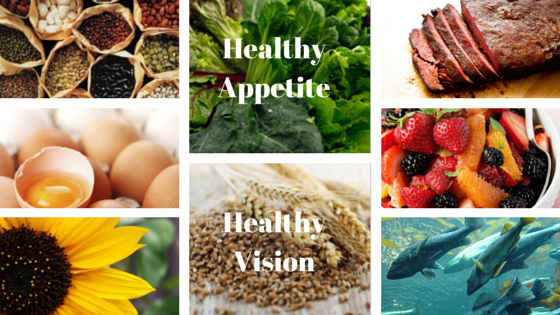
One powerful and simple step you can take in protecting your precious sense of sight is by taking mindful steps around your diet; watch what you eat. We don’t often connect the dots between our vision and what we had for breakfast, lunch or dinner but we should.  When we bring a sense of intention to what we eat, we empower ourselves to better care for our vision long before a visit to the eye doctor is required.

So, we thought we’d give you a hand by providing you a quick “check list” of foods that are powerful health agents and high in antioxidants. This way the next time you’re out to grab a bite to eat or you’re at the grocery store shopping for your weekly meal plans, you’ll have a head start on what to include on your food list.


Fish
Cold-water fish such as salmon, tuna, sardines and mackerel are rich in omega-3 fatty acids, which may help protect against dry eyes, macular degeneration and even cataracts. If you don’t eat seafood, you can get a good supply of omega-3s by using fish oil supplements or taking vegetarian supplements that contain black currant seed oil or flaxseed oil.

Leafy Greens
Spinach, kale and collard greens, to name just a few, are packed full of lutein and zeaxanthin, important plant pigments that can help stem the development of macular degeneration and cataracts. Broccoli, peas and avocados are also good sources of this powerful antioxidant duo.

Eggs
The vitamins and nutrients in eggs, including lutein and vitamin A (which may protect against night blindness and dry eyes), promote eye health and function.

Whole Grains
A diet containing foods with a low glycemic index (GI) can help reduce your risk for age-related macular degeneration. Swap refined carbohydrates for quinoa, brown rice, whole oats and whole-wheat breads and pasta. The vitamin E, zinc and niacin found in whole grains also help promote overall eye health.

Citrus Fruits and Berries
Oranges, grapefruits, lemons and berries are high in vitamin C, which may reduce the risk of cataracts and macular degeneration.

Nuts
Pistachios, walnuts, almonds — whichever type tickles your fancy — are rich in omega-3 fatty acids and vitamin E that boost your eye health.

Legumes
Kidney beans, black-eyed peas and lentils are good sources of bioflavonoids and zinc — and can help protect the retina and lower the risk for developing macular degeneration and cataracts.

Fish Oil, Flaxseed Oil and Black Currant Seed Oil
These super supplements contain omega-3 fatty acids and have many eye health benefits, including helping to prevent or control dry eye syndrome as well as reduce the risk of macular degeneration and cataracts.

Sunflower Seeds
Help keep your eyes healthy and disease-free by snacking on sunflowers seeds, which are excellent sources of vitamin E and zinc.

Beef
In moderation, lean beef in your diet can boost your eye health. Beef contains zinc, which helps your body absorb vitamin and may play a role in reducing risk of advanced age-related macular degeneration.

The Play Of Life

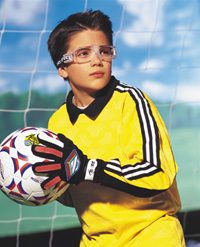
kid6In preparation for this months’ SPORTS EYE SAFETY AWARENESS MONTH we read quite a few articles, blogs and social media newsfeed to see what the latest is in the world of Optometry and Ophthmalogy. Now, if you’ve read one, you’ve pretty much read them all when it comes to eye safety and sports.  Every parent [for the most part] understands the need to protect their child’s precious sense of sight when it comes to sports activity. But, do we understand the emotion, psychological and mental ramifications when the importance of healthy vision is overlooked.

Studies show that only four in ten kids, between the ages of 6-12 years, are actively engaged in neighborhood sports. In addition, studies also an increase in the decline of these numbers in the near future.  The lack of mobility and engagement for our children increases their risk for other health related challenges.  In America alone, obesity is the number one reason our children become high risk for cardiovascular disease, bone and joint problems, sleep apnea, and social and psychological problems such as stigmatization and poor self-esteem.  For most families this is just the beginning.

It seems farfetched and an extreme stretch to see the connection between healthy eye sight and our children’s over well-being. And yet, it [a child’s vision] is usually one of the first signs to alert us there is a deeper issue at hand; especially if your child is active in sports. Like with most things in life, one circumstance has the power to affect all areas of our lives. The same applies for our kids.

However, the signs that your child needs glasses are not always clear.  And so, to help you know what to look for, here are a few tips to help you out:

  1. Tilting their head.This can indicate an eye muscle imbalance.
  2. Covering one eye/frequent squinting one eye to see the ball either far or near.
  3. Losing their place in an attempt to catch, throw or follow the ball or apparatus.
  4. Physical complaints like headaches, watery eyes or dry eyes.
  5. Problems seeing outdoors, losing sight of the ball, the pitch, especially during quick movement.
  6. Disruptive behavior during practice/at school, such as talking while the teacher/coach is talking or distracting other students.

These are just a few tips to help you gage your child’s eye health development. Keep in mind, one or two incidents may not be cause for alarm but if you notice a consistency over time, you’ll want to schedule an eye exam just to be sure.  And remember, children don’t know the difference between impaired vision and correct vision. They rely on us to catch the signals and notice the signs. When it comes down to it, isn’t it up to us to be team players in protecting their precious sense of sight?

We thought so…game on!

Your SPRING SURVIVAL GUIDE For Allergy Season.

It’s that time of the year again: SPRING ALLERGY SEASON!  There’s nothing more frustrating and confusing than getting a handle on your allergies. If it’s not the itchy eyes, it’s the running nose and even red dry eyes. What’s an individual to do, right? Introducing your spring survival guide for this season!

Well, stick with us and we’ll make certain you’ll go places; albeit only those of your choosing with as little pollen as possible. Here are a few tips, tools and information to help you manage this year’s allergy season. As we all know, allergy season affects each person differently. What works for some, won’t necessarily work for all. So, take what applies or what spring allergy seasonyou are comfortable with and leave the rest.

IS IT BEST TO MANAGE MY ALLERGIES WITH OVER THE COUNTER DRUGS OR HOMEOPATHIC?

The truth is you can do either. This is an issue of preference and not just personal preference but body wisdom preference. If something along a homeopathic remedy is much more effective in providing you relief and comfort, then stick with that by all means. However, always make certain you are consulting with your primary healthcare doctor as well as your eye doctor. Certain medications and/or homeopathic remedies do effect your blood pressure as well as your overall body health.  And, as we all know your overall body health affects your vision at times.

ASIDE FROM MEDICATIONS OR HOMEOPATHIC REMEDIES, IS THERE ANYTHING ELSE I CAN DO?

There’s always plenty you can do to alleviate allergies during the spring season.  For starters, begin at home where you spend a good portion of your time. Sticking to regular cleaning/dusting, around the house, will help to reduce triggers such as dust build up or even pollen that accumulates over time. Consistency is the name of the game.

Also, daily monitoring of the pollen count is always a good method to follow. There is nothing like driving around town with your eyes streaming water or your noses dripping, while you attempt to make your way to your next meeting, to make this a hard lesson to learn.  Each day is a different day during allergy season, so keep track of pollen counts to keep a firm handle on your allergies. It goes without saying, when the pollen count spikes, it best to stay indoors.

HOW DO I KNOW IF OR WHEN I NEED PRESCRIPTED MEDICATION FOR MY ALLERGIES?

Chance are if you’ve spent the last few allergy season bending over backwards [sometimes literally], trying every homemade remedy under the sun or you’ve gone through just about all of the strongest over the counter remedy’s from the drugstore, it’s time to consult your doctor.

A great place to start is to get an allergy test to know exactly what it is that triggers an allergic response. Once you have taken your test, consult with your physician about what your options are moving forward.  Combined with your personal medical history, it will be much easier for you to design an all around health plan that will enhance your quality of life and allow you to enjoy springtime as much as possible.

Remember, a great health plan for the allergy season will always incorporate a plan for your eye health as well. Given the fact we experience our strongest allergy symptoms in our eyes and nose, be sure not to leave them out of your plan!