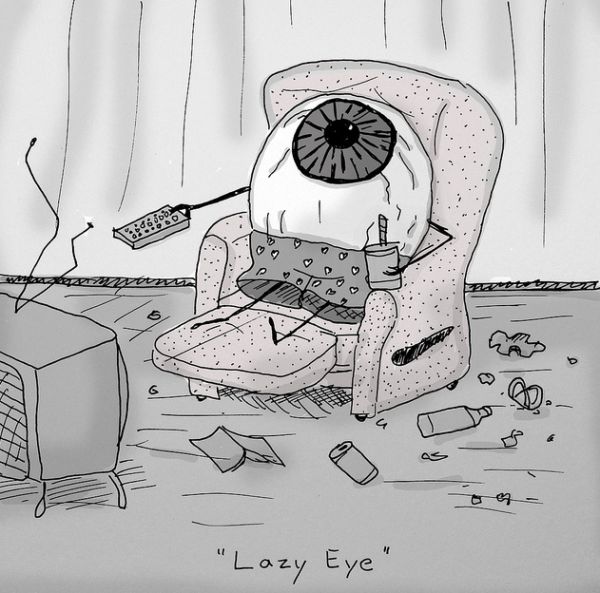
To Be Or Not To Be Lazy…

The truth about that “lazy eye.”

There is so much conversation that happens around the topic of “lazy eye,” also known as amblyopia, we thought we should take a little time to clarify some points and highlight a few others. Despite popular belief, for starters, ‘lazy eye’ can happen in both eyes and not just one. In truth of the matter is the term lazy eye is inaccurate as the condition is caused by a development problem in the brain and not the eye.

7cdefbb9a6faf7e38f197ad0e3348c38The truth is amblyopia is a brain thing and not a ‘lazy eye’ issue at all.  For instance, if one eye hasn’t had the opportunity to develop fully or as well as its counterpart, the brain will ultimately work harder [over compensation] to use the ‘good eye’ over the ‘lazy eye.’  When detected in early childhood, often times wearing a patch solves the problem straight away. However, it is not the only means of treating ‘lazy eye.’  Consulting with your eye doctor is always the best route to take when you have questions or notice early signs of this condition in your child.

Nevertheless, it’s always good to have a little information in your back pocket when you begin researching and delving into this process of uncovering “the truth about lazy eye” and all the ways it may or may not affect your child’s life.  We thought we’d help by give you a little head start.

A few things to keep in mind when discussing ‘lazy eye’:

  • it is a condition that develops from an early childhood when one eye does not develop properly
  • ‘lazy eye’ can actually happen in both eyes though one will be weaker than the other
  • wearing an eye patch alone is not the only form of rehabilitating the eye
  • blurred vision, double vision and lack of eye coordination are signs of ‘lazy eye’
  • a combined effort of vision therapy and wearing a patch is an optimal form of treatment
  • amblyopia and strabismus [crossed eyed] are not the same thing
  • it is not true that once a child reaches adulthood ‘lazy eye’ is untreatable

Remember, making sure your child’s annual eye exam is a regular occurrence is one way to keep an eye out for an early warning signs. As with most things in life, knowledge is power and empowering your child’s precious sense of sight is priority!  At least that’s what we think here at Envision.

50 Shades Of Great!

They say the eyes are the windows of the soul and to a large degree [if not completely true depending on your school of thought]; it can said most agree with this point of view. Much truth about our overall health can be detecting with a simple eye exam. From one simple routine check-up, your eye doctor can tell how your blood pressure is doing, your mental health [early detection of brain aneurysm], your risk level for diabetes, whether or not you have a vitamin deficiency, if you have melanoma and the list goes on!

Clearly your relationship with your eye doctor should be one at the top of the list among many. Not to put all the pressure nor responsibility of your health on your eye doctor, we wanted to share with you our ’50 Shades Of Great’ ideas to help you in your self care for the remainder of the year. Not only are these tips simple, but they’ll go a long way in strengthening your precious sense of sight!

So far this is what we’ve come up with [feel free to add to it]:

  1. Sip some hot tea first thing in the morning.
  2. Implement some form of exercise into your life.
  3. Put more herbal in your meals [as in herbal liquids.]
  4. Before you grab that pain killer, rub your temples first.
  5. Eat more ginger.
  6. Grab a little sniff of rosemary [Yup, you read correct! Sniff away.]
  7. Embrace more bitters, decrease the sugar intake.
  8. Go fish! No, not the game, eat the actual fish.
  9. Pop-A-Pro! — as in a Probiotic. Get more ‘good bacteria’ into your system.
  10. Give yourself the benefit of Bilberry – a cousin to the blueberry helps with night vision.
  11. Eat more bananas.
  12. Lavish yourself with some lavender! Put it in your bath or your tea.
  13. Put a cap on the joint pain with some capsaicin
  14. Book yourself a massage. Relax. Release. Let Go.
  15. Eat some garlic. Yes, garlic it’s an antibacterial agent.
  16. Use tea tree oil for fungus.
  17. Try drinking Tulsi as a tea.
  18. Eat more avocados.
  19. Stock some Echinacea in your cupboard.
  20. Invest in a Neti Teapot [you’ll need it to brew your herbal teas.]
  21. Keep things regular with a little Triphala.
  22. Stay open to life. Talk to people.
  23. Spend time/walk your pet; if no pet borrow one.
  24. Grab a little GLA for hair loss [Google it.]
  25. Go natural…avoid products that compromise your health.
  26. Eating more Japanese food. Wasabi and Shitake mushrooms are good for you!
  27. Use a little Black Cohosh for menopause.
  28. Drink lots of water DAILY.
  29. Be mindful of your carb intake.
  30. Try using products that contain Calendula a natural antiseptic.
  31. Keep things hot! Throw a little cayenne pepper into the mix.
  32. Keep things sweet. A little licorice [powder form] goes a long way for canker sores.
  33. Load up on lots of love. Connect with your family and friends often.
  34. Drink more cranberry juice.
  35. Grab a bottle of alcohol and take a swab –under your feet that is! Keep bacteria at bay.
  36. Put a little pep in your step. Drink more peppermint tea.
  37. Increase your daily intake of vitamin D.
  38. Purchase or invest in a tongue scraper. Keeps bacteria from building in the mouth.
  39. Form a friendship with friendly fungi. It helps strengthen your lungs.
  40. Duct tape it! — your warts that is. [Don’t ask old family recipe.]
  41. Wash after yourself. Keep hands clean to prevent spread of germs.
  42. Put a little tincture in it. For truly upset stomach issues, this blackberry root will help.
  43. Grab a fistful of fennel and chew it. Yup, and swallow.
  44. Eat more honey.
  45. And, eat more broccoli.
  46. Strengthen those bones with an increase in calcium.
  47. Soothe your sore throat with some slippery elm.
  48. Be sure to laugh a little each day. No scratch that – laugh a lot every day.
  49. Do one thing each week to take you out of your comfort zone; keep things exciting.
  50. Each year check off one thing from your bucket list; keeps things moving.

The End!

Remember, though some of these tips may seem simple they’re also a means of empowering your overall quality of life. In the end, you can always wait until your next eye appointment where the eyes will have it and alert your doctor if anything is not as it should be.  Carry on…

The Truth About CVS!

For starters, we won’t blame you if you thought for a nanosecond this might be about CVS the drugstore; oh not at all! The truth is not many people know what CVS means or what the acronym stands for when it comes to eye health. Since, according to the Vision Council, over two thirds of us actually suffer from this [CVS], we thought it would be a good idea to help you get clear on exactly what that means for you and your quality of life.

Is CVS stealing your precious sense ofCVS, better known as Computer Vision Syndrome, has become one of America’s leading causes for blurry visions, headaches, dry eye syndrome, backaches and even neck aches. Since hurtling into our “Age of Technology” in the last few decades, we’re spending more than half of our time viewing smaller screens at less than two feet of distance. Between our smart phones, iPhones, tablets, and computers it’s a wonder we’ve not completely lost sight of the forest from the trees!


Have you ever wondered why after working on your computer for several hours per work day your eyes begin to water? Experiencing increased fidgety feelings that cause you to take a walk around the office or move around in your chair constantly? Or, do you find yourself taking off and putting on your eyeglasses throughout the day; compensating for clarity and focus in your vision?

If you answered yes to any of these questions, then chances are you are experiencing CVS.   Part of enhancing and protecting your quality of life is keeping abreast of conditions that compromise it to begin with. For instance, be aware your prescription glasses are made specifically for either extremely near distance or very far distance –not in-between.  If you have reading glasses, they are for very close proximity; a distance much less than two feet.  The strain on your eyes, when viewing smaller screens to then switch over to viewing distance, increases tremendously when you don’t have the proper eye wear to assist you with your changing points of view — literally.

Not to mention, the strain on your vision when you pupils have spent several hours dilating back and  forth is just plain exhausting mentally and physically.  Also, the strain on your body from sitting for several hours per day, readjusting your posture, and hunching over to compensate for your blurry vision becomes even more challenging as you try to keep up with the demands of your day.  In the end, what might appear as few or minor inconveniences can surmount into a greater concern down the road.  Of course, having your ophthalmologist or your Ophthalmologists exam in your eyes moderately throughout the year is always your best course of action.

You may find that obtaining an additional pair of eyewear is just the investment you need and not the extra unnecessary expense many believe.  So, the next time you’re in the eye doctors office and the Medical Assistant or Optician on hand asks you those “pesky list of questions” pertaining to your lifestyle, understand that’s just their way of getting a clear view of all the factors that might be robbing you of your precious sense of sight.  Remember, it’s not just about 20/20 vision but it’s also about 100% quality of life.

Why Healthy Eyes = A Happy Heart

So, because we love you, we wanted to fill you in on a little secret. Okay, maybe it’s not a huge little secret and maybe there are several we’ll reveal, but there is something we thought you should know.  For starters and officially speaking February is Heart Month and we’re completely on board!
Of course we could probably do with a little less papier mache hearts, candied heart, cards filled with hearts, signs designed with hearts but do keep the chocolate covered hearts. Don’t you agree?  And let’s not forget the most important kind of heart of all — the happy heart.  With all the holiday decor, talk about special date nights and weekend, and the words ‘Happy Valentine’s Day’ everywhere yJPEGHappyHeartou look, I bet you didn’t know you had a valentine all along already?
Secret #1: You Have A Secret Valentine Already!
That’s right. Secretly, albeit not in the romantic sense, your eye doctor has had love for you all along. And your eye doctor’s care for your precious sense of sight has indirectly helped to save your life! Yes, we realize this is huge and we wouldn’t be in the least surprised if you needed a minute to digest this all.  But, while you’re still digesting, allow us to let you in on another little secret.
When your visit your eye doctor, regularly we hope, there are several things he or she is hoping to accomplish. Of course, making sure you can see 20/20 is always right up there on their list. However, there are a few other things they’re looking for as well.  As would be expected by any serious admirer, your eye doctor is looking for culprits that would impede your quality of life. Anything that would hinder your happiness or your ability to have a happy heart.
Secret #2: Why A Healthy Eyes = Happy Hearts
Believe it or not, there is one culprit that attempts to threaten the quality of life for many of us and our loved ones. That culprit is hypertension. As serious as this sounds [and it is] there is one quick and simple way to monitor your blood pressure and that would be keep your date with your eye doctor!
When your eye doctor exams the health of your eyes, they are also checking, inadvertently, the health of your heart. Since, one of the very first telltale signs of a heart condition is little hemorrhages in the tiny blood vessels at the back of your eyes, your routine eye exams become something rather special. An eye doctor can spot this right away and confirm that your blood pressure is not just a transient glitch. In fact, eye doctors are trained to look for a distinctive picture that indicates extreme hypertension, the kind that would require immediate hospitalization.
Though there are several ways to take good care of your heart, we thought you appreciate knowing someone in your life has been looking after your happy heart all along. So this Valentine’s Day share the love and  encourage family, friends and neighbors to get a ‘happy heart check’ soon.
For more information on maintaining a happy and healthy heart, click this link to read more!


The Important Thing About Change…and your vision.

Love-change-SmallIf there is one thing in life that we can always count on it is the experience of change we’re all liable to visit at one time or another. Life is all about change. And, depending on your disposition, experience and belief system, you’ll either experience change with some degree of apprehension or pure delight. Either way, we all agree, change will happen.
Take it from us! Change is inevitable. We feel akin to experts in this matter. Have you noticed our recent location change, team dynamics change, and even our “look” has changed? Exactly. We’re pros at this…or not.
Nevertheless, the question remains: “What is the best way to navigate one of life’s more challenging changes we may all experience at some point or another? What is that change you may ask? How about the change in our vision. This can be a very scary experience for some and for  others, it can go unnoticed resulting in new experiences we would rather not have.
To help you navigate an otherwise intimidating landscape, here are a few tips to keep you balanced, clear and happy — if and when a change in vision becomes your experience.
SIGNS YOUR VISION MIGHT HAVE CHANGED:
  1. Losing Focus:  The most common age-related vision change — presbyopia — happens to almost everyone beginning between the ages of 40 and 50. A natural result of aging, the lens begins to lose elasticity, making it harder to focus vision up close for such activities as reading. But presbyopia can be corrected easily with reading glasses or glasses with bifocal, trifocal or progressive (“no-line”) lenses.
  2. Declining Sensitivity:  The lens of the eye also becomes increasingly dense and more yellow with age. These changes may affect color perception and contrast sensitivity. For instance, the color blue may appear darker and harder to distinguish from black. And it may become difficult to tell where an object ends and its background begins, making it difficult to see curbs or steps, for example.
  3. Needing More Light:  As the eye ages, the pupil gets smaller, resulting in the need for more light to see well, along with more time to adjust to changing levels of illumination (going from daylight into a dark theater or dimly lit restaurant, for example).
The good news is if you experience any of the following symptoms rest assured it’s normal.  The most important thing to remember is a change in vision does not mean nor does it indicate an end result of a loss of sight. A great way of intentionally working towards keeping your sight and promoting optimal eye health is:
  1. Schedule And Keep Routine Eye Appointments. Just like most of our healthcare concerns, our precious sense of sight is equally as important as visiting our family doctor, dentist or OB GYN.
  2. Exercise Daily and Monitor Blood Pressure. For many of us a daily routine or even weekly habit for exercise does the body good. One early sign of vision change is our blood pressure and a great way of maintaining optimal health is to exercise regularly.
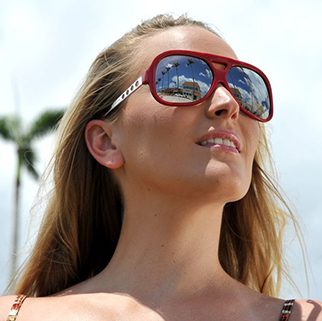
  3. Guard Your Eyes From The Sun. Yes, believe it or not, it’s normally not a good idea to gaze directly at the sun and given the effects of UV rays, our eyes are sensitive creatures and require our attention to detail. That detail can be as simple as grabbing those shades on the way out the door.
  4. Protect  Your Eyes. In the event of any injury, whether you deem it big or not, be sure to wear protective eye gear when you are at higher risk for eye injury. So, if you’re an active sports player or you’ve experienced a cornea scratch or abrasion, protect your eyes from further injury. It’s always better to be safe, than sorry.
  5. Consult Your Doctor When Taking Supplements. As healthy as we all want to be, we also want to be smart. When taking supplements, be sure to consult your family doctor and to know of any and all side-effects that may occur to your body system
In the end, no matter the change, it’s important we exercise caution, wisdom and care when protecting our vision. And remember, when in doubt, consult your Optometrist or Ophthalmologist!

How Do I Know if My Child is Ready to Wear Contact Lenses?…

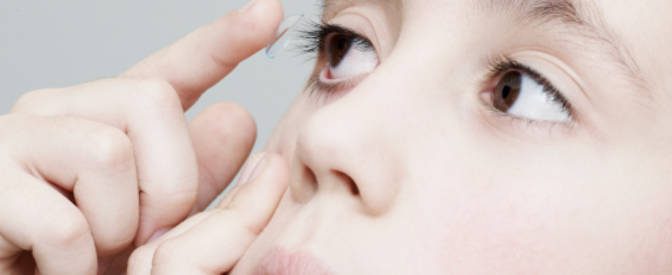
Have you ever wondered about fitting your child in contact lenses, but are unsure if he or she  is ready, or if it is safe?  The answer might surprise you!

According to a recent study, children 8-11 years old typically have no trouble handling, inserting and removing daily disposable contact lenses, even without the help of their parents.  Learning to insert and remove the lenses may take some time and dedication from both you and your child’s eye care professional s, but with patience and good instruction this process can be faster and easier than expected!

One of the most important considerations for deciding if your child is ready to wear contacts is their overall personal hygiene and dedication to their responsibilities.  Maintaining overall eye health with contact lens use depends on regular, thorough cleaning of the lens, and proper storage and handling techniques. Responsible children with good hygiene habits tend to have little issue with this element of contact lens wear, and would be great candidates to try contacts!  If your child still struggles with these areas, waiting awhile to fit him or her with contacts may make the process easier for you and your child.

In fact, children can be great candidates for contact lens wear! Most children are more compliant than teenage or adult wearers, because that have not yet formed bad handling and wearing habits, such as over-wearing their contact lenses or using the incorrect solution. Also, children tend to suffer from dry eye syndrome less frequently than adults, so comfort is less of a problem for them.

Contact lenses can also help your child build their confidence, and can even improve their performance in physical activities. Children who are tired of wearing glasses, or have a high prescription, may feel more confident at school and while socializing with contact lens use. Also, contact lenses remain stable on a child’s eye while he or she is running or being active, which can help improve his or her sports performance. And if you are the parent who is constantly replacing your child’s glasses due to damage or loss, you can rest easy knowing contact lenses are another option for your child!

The best way to determine your child’s readiness to wear contacts is considering these facts, and weighing the pros and cons of your particular situation. Your eye care professional would be happy to discuss fitting your child in contact lenses further, and help you decide what the best choice for you and your child may be!

Your Yearly Responsibility…

Your Yearly Responsibility as a Contact Lens Wearer

by Jessica Thompson


If you wear contacts nearly every day, then you probably already know that every year you must make a trip to the eye doctor to get your prescription renewed. What many of our patients don’t realize that it’s not just your eye doctor, but also the FDA that requires this.  Many of our patients have been wearing contacts for decades, and some of them have rarely experienced complications with their contact lens use. These patients are quite fortunate and are most likely wearing their contacts responsibly. But why, if you live symptom free, should you come in every single year for an eye health and contact lens evaluation? Why can’t you just re-order your prescription if you don’t think your vision has changed?

Your eye doctor can uncover countless conditions, with your eyes and systemically, for which you may have no symptoms. Contact lenses can actually act as a bandage on the eye, masking symptoms. Some contact users will even develop a lack of sensitivity of the cornea. This lack of sensitivity may prevent you from realizing that your corneas are suffering from an infection.

Your cornea is an amazing transparent tissue structure, devoid of blood vessels and not to be taken for granted. The cornea maintains a perfect equilibrium of water, oxygen and nutrients. This amazing structure is where your contact lenses rest every day. When you wear your contacts, according to your doctor’s advice, you can expect to maintain a “clear” cornea. When the cornea is in danger, your immune system will try to protect it and may cause corneal “clouding” in an effort to “pump” the cornea back to natural equilibrium. You are born with a specific number of NON-REGENERATIVE corneal endothelial cells. If they are damaged, they will not regenerate and you may not wear contact lenses again. And if you LOVE your contacts, this could be a very sad fate!

If you aren’t seeing your eye doctor every year to renew your contact lens prescription, chances are that you are over wearing your contacts. Over-wear of lenses, improper cleaning of lenses, extended-wear use of lenses, and overly tight lenses may increase the risk of painful and vision threatening conditions like Corneal Ulcers, Keratitis, Corneal Swelling and Giant Papillary Conjunctivitis. A corneal ulcer starts when bacteria (or rarely a fungus or parasite) infects an area of the corneal surface. The surface may break down, forming a small corneal abrasion, due to routine lens use. Even a successfully treated corneal ulcer may still leave a scar which could affect the vision permanently.

It is our goal as your eye care professionals to protect your most precious sense of sight, for your lifetime. As a contact lens wearer, it is certainly in your best interest to be seen every year to allow your eye doctor to ensure that you are wearing your contact lenses healthily and responsibly, while maintaining your very best sight!

My First Eye Exam

I have to admit when I moved to Asheville I wasn’t sure what to expect. I was happy enough there was at least more than a dozen places I could eat given my dietary restrictions. The fact I woke up every morning to the majesty of the Blue Ridge Mountains was more than I could expect. So, image my utter surprise when I learned that I would not only revel in these pleasures but also be provided with exceptional eye care to boot!  Hey, I’m from New York City and “exceptional eye care,” unfortunately is not top of the list.

I guess to appreciate my delirious state of happiness is to know a little of my story.   For starters, by the age of 9, I was wearing glasses.  Of course, unlike most kids, I thought wearing glasses would allow me to stand out in the crowd and be cool. A daily habit of wearing them, the exact opposite of what I was told to do, ensured I’d wear them for the rest of my life. Of course, I had no clue how important my eye health really meant until I moved to Asheville, North Carolina.

Mashley1

As a native New Yorker, I was accustomed to the typical “hurry up and wait” kind of patient care where you picked your frames from a selection of crappy glasses unless you wanted to pay out of the nose for some designer frames that typically were no better than the run of the mill selection up front near the cash register.  Of course, I had no idea that the normal “cattle call” that had become the norm in New York City [walk in, sit down, shut up, what can you see?, wait some more, come back in a week, don’t call us we’ll call you, here are your frames, NEXT!!!!!] left very little to be desired in terms of patient care much less education on eye health.

THIS LITTLE FACT COULD HAVE COST ME MY EYESIGHT AND HERE IS WHY.

When I finally made the decision to have my eyes checked at Envision Eyecare (mainly due to the fact how friendly the staff) I was flabbergasted how attentive and patient my eye doctor.  My eye doctor that day, Dr. Melanie Denton, spent time talking me through each step she took to examine my eyes. Her knowledge of the eye and her ability to share that knowledge with me was extremely helpful in helping me understand the state of my eye healthy.  You see, what I didn’t know was my family history put me in a category for some serious eye disease I had no clue about.  Despite the fact I wore glasses nearly all my life and all my eye appointments, a thorough and comprehensive eye examine was never my experience.

ENTER DR. GOLSON AND HIS TEAM OF SUPERSTARS!

The time taken to question thoroughly my family history, my experience with contact lenses and eye wear unearthed a few surprises for me.  One of my surprises was to learn I suffered from “dry eye syndrome” all my life.  You mean to tell me it wasn’t allergies or windy weather that made me miserable? I had never even heard of “dry eye syndrome” until I walked into Envision Eyecare.  Personally, I found that rather scary given I’ve been wearing glasses for over 30 years? My next surprise was to learn that my family history made me susceptible to glaucoma.

To be honest, I was terrified when I learned this news.

However, again, the tender care that Dr. Denton offered me helped me to assuage  my fears and know that I could take preventative measures to not fall prey to this eye disease. All in all, I was so grateful to have finally had my very first eye examined ever in my life.

And who said you can’t teach an old dog new tricks?

By Michele Ashley

What is Macular Degeneration

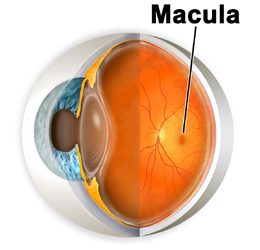
Macular Degeneration, also known as ARMD (or Age Related Macular Degeneration), is the leading cause of vision loss in individuals over the age of 55 in America. This disease causes damage to the tissue of the macula, or the small portion of the retina responsible for central and detail vision. Symptoms often develop over time, sometimes causing gradual and irreversible vision loss. While ARMD is more commonly seen in elderly patients, there are many ways people of all ages can help reduce their risk of developing the disease.

Jeanette2

The primary non-controllable risk factors of macular degeneration include age, a family history of macular degeneration, and fair-pigmentation, and this disease more commonly affects females and Caucasians.  These are the risk factors we cannot control.

The great news is that there are many risk factors we can control! Smoking, inactivity, and prolonged sun exposure play a part in the development of ARMD. Through smoking cessation, increased activity and exercise, and the proper UV-blocking sun-wear, patients can reduce their likelihood of developing this disease.

Similarly, diet and nutrition play a huge role in the prevention of ARMD.  Our eyes require certain antioxidant nutrients, (also called caratenoids), to maintain a healthy macula. These include lutein, zeaxanthin, and meso-zeaxanthin, and can only come from the foods we eat, and supplementation.

Jeannette1

Consuming a diet rich in green leafy vegetables, vitamins B and C, zinc, and omega-3’s, while avoiding fat, sugar and cholesterol, can help prevent macular degeneration.  Choosing a diet like this can also help with managing high blood pressure and obesity, which not only improves the health of our bodies, but more specifically our maculas!

Summer is the perfect time to go on a long adventurous hike with your friends, then grill some caratenoid-packed veggies, all while sporting your awesome macula-protecting sunglasses! Who knew that helping reduce our chances of developing ARMD could be so easy and fun!

Children And Their Eyes…


Before I became a part of the amazing team at Envision, I worked in childcare.  I got my degree in psychology with an emphasis in child development.  I was a preschool teacher for three years, baby sat everyone’s kids when I could, and was a nanny to three children for almost two years.  It’s safe to say, I know a thing or two when it comes to kids.

Throughout my years of working in childcare; kids would get sick, pink eye would be passed around, and there was always your occasional lice check.  I always heard parents talking about taking their children to their primary care physician for check up’s, or to the dentist to get their teeth cleaned, but never did I hear anyone talk about taking their child to the eye doctor.

Since working in the eye care field, I have learned so much about the importance of a yearly, comprehensive eye evaluation.  Most individuals assume that you don’t need to go to the eye doctor unless you are having trouble with your vision.  Truth be told, having the actual health of the eye evaluated, is very important for individuals at any age.

Did you know that children can suffer from congenital glaucoma or retinoblastoma, a rare malignant tumor of the retina?  These types of diseases and other conditions can all be spotted with early detection, and often times, corrected if caught soon enough.  This is just one reason to have your child evaluated at an early age.

The American Optometry Association estimates that 1 in 4 children have a vision- related condition, and 60% of learning disabilities are associated with vision problems.  Poor vision can also affect a child’s physical and neurological development as eye muscle imbalances called strabismus or more commonly, “crossed eye’s” can lead to amblyopia, also known as, “lazy eye.” This is when the individuals brain suppresses vision from one eye to avoid seeing double, which can lead to total vision loss in that eye if untreated.

Getting your child into the eye doctor between 6-12 months is the perfect age for an initial comprehensive screening.  InfantSee, a public health program for infants, offers a free comprehensive evaluation to infants before a year of age.  This is a great way to get your child screened early to be sure their eyes are healthy.  After the initial screening children can return to see their eye doctor around Kindergarten for a vision assessment and eye health evaluation.

If you are interested in getting your child seen for a comprehensive exam, or if you have questions about your child’s eyes, or vision, please come by or call our office.  We would love to help in any way we can.

By: Katie Porter