
Author: Envision Eyecare

Your Yearly Responsibility…

Your Yearly Responsibility as a Contact Lens Wearer

by Jessica Thompson


If you wear contacts nearly every day, then you probably already know that every year you must make a trip to the eye doctor to get your prescription renewed. What many of our patients don’t realize that it’s not just your eye doctor, but also the FDA that requires this.  Many of our patients have been wearing contacts for decades, and some of them have rarely experienced complications with their contact lens use. These patients are quite fortunate and are most likely wearing their contacts responsibly. But why, if you live symptom free, should you come in every single year for an eye health and contact lens evaluation? Why can’t you just re-order your prescription if you don’t think your vision has changed?

Your eye doctor can uncover countless conditions, with your eyes and systemically, for which you may have no symptoms. Contact lenses can actually act as a bandage on the eye, masking symptoms. Some contact users will even develop a lack of sensitivity of the cornea. This lack of sensitivity may prevent you from realizing that your corneas are suffering from an infection.

Your cornea is an amazing transparent tissue structure, devoid of blood vessels and not to be taken for granted. The cornea maintains a perfect equilibrium of water, oxygen and nutrients. This amazing structure is where your contact lenses rest every day. When you wear your contacts, according to your doctor’s advice, you can expect to maintain a “clear” cornea. When the cornea is in danger, your immune system will try to protect it and may cause corneal “clouding” in an effort to “pump” the cornea back to natural equilibrium. You are born with a specific number of NON-REGENERATIVE corneal endothelial cells. If they are damaged, they will not regenerate and you may not wear contact lenses again. And if you LOVE your contacts, this could be a very sad fate!

If you aren’t seeing your eye doctor every year to renew your contact lens prescription, chances are that you are over wearing your contacts. Over-wear of lenses, improper cleaning of lenses, extended-wear use of lenses, and overly tight lenses may increase the risk of painful and vision threatening conditions like Corneal Ulcers, Keratitis, Corneal Swelling and Giant Papillary Conjunctivitis. A corneal ulcer starts when bacteria (or rarely a fungus or parasite) infects an area of the corneal surface. The surface may break down, forming a small corneal abrasion, due to routine lens use. Even a successfully treated corneal ulcer may still leave a scar which could affect the vision permanently.

It is our goal as your eye care professionals to protect your most precious sense of sight, for your lifetime. As a contact lens wearer, it is certainly in your best interest to be seen every year to allow your eye doctor to ensure that you are wearing your contact lenses healthily and responsibly, while maintaining your very best sight!


My First Eye Exam

I have to admit when I moved to Asheville I wasn’t sure what to expect. I was happy enough there was at least more than a dozen places I could eat given my dietary restrictions. The fact I woke up every morning to the majesty of the Blue Ridge Mountains was more than I could expect. So, image my utter surprise when I learned that I would not only revel in these pleasures but also be provided with exceptional eye care to boot!  Hey, I’m from New York City and “exceptional eye care,” unfortunately is not top of the list.

I guess to appreciate my delirious state of happiness is to know a little of my story.   For starters, by the age of 9, I was wearing glasses.  Of course, unlike most kids, I thought wearing glasses would allow me to stand out in the crowd and be cool. A daily habit of wearing them, the exact opposite of what I was told to do, ensured I’d wear them for the rest of my life. Of course, I had no clue how important my eye health really meant until I moved to Asheville, North Carolina.

Mashley1

As a native New Yorker, I was accustomed to the typical “hurry up and wait” kind of patient care where you picked your frames from a selection of crappy glasses unless you wanted to pay out of the nose for some designer frames that typically were no better than the run of the mill selection up front near the cash register.  Of course, I had no idea that the normal “cattle call” that had become the norm in New York City [walk in, sit down, shut up, what can you see?, wait some more, come back in a week, don’t call us we’ll call you, here are your frames, NEXT!!!!!] left very little to be desired in terms of patient care much less education on eye health.

THIS LITTLE FACT COULD HAVE COST ME MY EYESIGHT AND HERE IS WHY.

When I finally made the decision to have my eyes checked at Envision Eyecare (mainly due to the fact how friendly the staff) I was flabbergasted how attentive and patient my eye doctor.  My eye doctor that day, Dr. Melanie Denton, spent time talking me through each step she took to examine my eyes. Her knowledge of the eye and her ability to share that knowledge with me was extremely helpful in helping me understand the state of my eye healthy.  You see, what I didn’t know was my family history put me in a category for some serious eye disease I had no clue about.  Despite the fact I wore glasses nearly all my life and all my eye appointments, a thorough and comprehensive eye examine was never my experience.

ENTER DR. GOLSON AND HIS TEAM OF SUPERSTARS!

The time taken to question thoroughly my family history, my experience with contact lenses and eye wear unearthed a few surprises for me.  One of my surprises was to learn I suffered from “dry eye syndrome” all my life.  You mean to tell me it wasn’t allergies or windy weather that made me miserable? I had never even heard of “dry eye syndrome” until I walked into Envision Eyecare.  Personally, I found that rather scary given I’ve been wearing glasses for over 30 years? My next surprise was to learn that my family history made me susceptible to glaucoma.

To be honest, I was terrified when I learned this news.

However, again, the tender care that Dr. Denton offered me helped me to assuage  my fears and know that I could take preventative measures to not fall prey to this eye disease. All in all, I was so grateful to have finally had my very first eye examined ever in my life.

And who said you can’t teach an old dog new tricks?

By Michele Ashley

What is Macular Degeneration

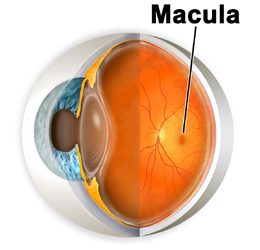
Macular Degeneration, also known as ARMD (or Age Related Macular Degeneration), is the leading cause of vision loss in individuals over the age of 55 in America. This disease causes damage to the tissue of the macula, or the small portion of the retina responsible for central and detail vision. Symptoms often develop over time, sometimes causing gradual and irreversible vision loss. While ARMD is more commonly seen in elderly patients, there are many ways people of all ages can help reduce their risk of developing the disease.

Jeanette2

The primary non-controllable risk factors of macular degeneration include age, a family history of macular degeneration, and fair-pigmentation, and this disease more commonly affects females and Caucasians.  These are the risk factors we cannot control.

The great news is that there are many risk factors we can control! Smoking, inactivity, and prolonged sun exposure play a part in the development of ARMD. Through smoking cessation, increased activity and exercise, and the proper UV-blocking sun-wear, patients can reduce their likelihood of developing this disease.

Similarly, diet and nutrition play a huge role in the prevention of ARMD.  Our eyes require certain antioxidant nutrients, (also called caratenoids), to maintain a healthy macula. These include lutein, zeaxanthin, and meso-zeaxanthin, and can only come from the foods we eat, and supplementation.

Jeannette1

Consuming a diet rich in green leafy vegetables, vitamins B and C, zinc, and omega-3’s, while avoiding fat, sugar and cholesterol, can help prevent macular degeneration.  Choosing a diet like this can also help with managing high blood pressure and obesity, which not only improves the health of our bodies, but more specifically our maculas!

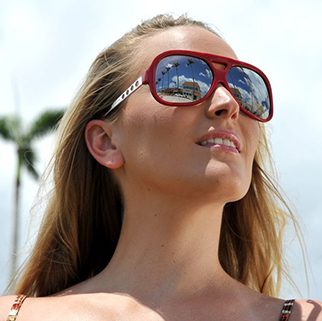
Summer is the perfect time to go on a long adventurous hike with your friends, then grill some caratenoid-packed veggies, all while sporting your awesome macula-protecting sunglasses! Who knew that helping reduce our chances of developing ARMD could be so easy and fun!

What You Need To Know Before You Purchase Your Next Pair Of Frames…


As an expert optician for Envision Eyecare it’s really important to me that you leave with glasses that are perfect for you! There are a lot of different factors that go into this. It starts with the shape of your face, your skin tones, how you use your glasses, your personality and some other factors. From what I’ve seen being in this industry, when new patients come to us, their frames are just not right for their face shape.  Let’s explore the different shapes!

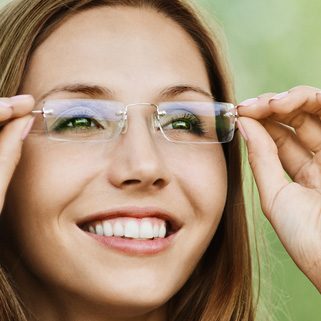
There are four main face shapes; oval, round, heart and square. When your face is oval your chin is slightly slimmer than your forehead and your features are well balanced. The shapes that would work best for this shape would be a rectangle or butterfly frame. The rectangle frame will help the narrower chin appear to be as wide as the forehead. Don’t forget also that a “cat eye” frame will accentuate your high cheek bones and you will find the “cat eye” looks great on every face shape!

Round faces are the same width and length with round contours resulting in soft features. Some of the best frames for this shape would be frames with straight lines. Rectangle frames look great and will help all of your features appear a little stronger. The “cat eye” frame will give a lift to the round face shape and I haven’t met anyone who doesn’t want that extra lift without having to have surgery!

Heart shaped faces have a narrow chin and jaw line. With a broad forehead this appears to be a heart. Round frames will take away from the broader forehead. Frames with a wider bottom will also make the narrower chin appear wider. Butterfly frames for women and those “cat eye” frames are going to accentuate your strongest features.

Faces that have the shape of a square have very well defined angles. They will have strong jawlines, foreheads and cheeks. An oval frame will help lengthen your face. While a round frame will help bring softness to your strongest features.  Again, that “cat eye” frame is going to lift all of your strongest features and help tone down the strong angles.images

As you can see it’s is really important that a frame match your face shape! As an optician we strive hard to help educate you on the frames that will work best for you! Come get to know one of our opticians and let us help guide you to the frame choice that will work best for you and your lifestyle.

 by Ashley Glass

Frown Less, Smile More


Smiling is the simplest and most wonderful thing that human beings can do. That beam comes from deep within, usually as a sign of joy, cheering others and even when you don’t feel like doing so, you smile anyway. We grin when we see a baby laugh, smirk when a friend does something silly or express grand delight with that big promotion at work. Smiling is a natural stimuli of the body to something that gives us a feeling of happiness. It has many benefits and it is scientifically proven that people who smile live a longer, healthier and emotionally stable life.

Let’s talk about some fun facts in regards to smiling. Studies have revealed that when we smile, our bodies release endorphins, serotonin and natural painkillers. Did you know that smiling can enhance your immune system? So for all the people who often fall ill, try smiling – maybe this can be your pill for the day. The free act of smiling also reduces blood pressure to a great extent.

Feeling upset? Smile, because it won’t cost you a tear but will definitely change your mood. Smiling can increase your blood flow and your heart beat, which in turn makes you happier. Some suggest chocolates for that occasional high, but a British study says that a single smile has the same impact of having a chocolate bar. Try it! It works and it’s free!

Smiling also makes us attractive. We are naturally drawn to people who smile. When you smile your whole face lights up, in fact your whole being does. You can convey warmth, friendliness and empathy through that smile. When you smile, you are unknowingly passing along your happiness. It change the moods of others, make things happier and that is extremely contagious! Smile often and you will see that you will draw more people towards you.

Smiling can change the way you live and the way you perceive life. It changes your brain activity and helps increase positive energy within you. A smile is a striking factor that will make everyday a happier one and may even enlighten others as well. It enhances and builds relationships. Smile at a stranger, smile at everyone it won’t cost nor harm you!

by Allie Rojas

Children And Their Eyes…


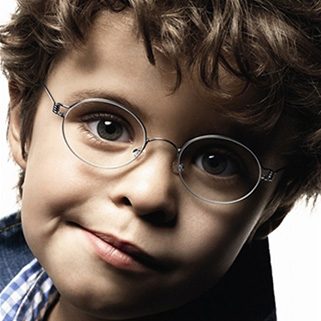
Before I became a part of the amazing team at Envision, I worked in childcare.  I got my degree in psychology with an emphasis in child development.  I was a preschool teacher for three years, baby sat everyone’s kids when I could, and was a nanny to three children for almost two years.  It’s safe to say, I know a thing or two when it comes to kids.

Throughout my years of working in childcare; kids would get sick, pink eye would be passed around, and there was always your occasional lice check.  I always heard parents talking about taking their children to their primary care physician for check up’s, or to the dentist to get their teeth cleaned, but never did I hear anyone talk about taking their child to the eye doctor.

Since working in the eye care field, I have learned so much about the importance of a yearly, comprehensive eye evaluation.  Most individuals assume that you don’t need to go to the eye doctor unless you are having trouble with your vision.  Truth be told, having the actual health of the eye evaluated, is very important for individuals at any age.

Did you know that children can suffer from congenital glaucoma or retinoblastoma, a rare malignant tumor of the retina?  These types of diseases and other conditions can all be spotted with early detection, and often times, corrected if caught soon enough.  This is just one reason to have your child evaluated at an early age.

The American Optometry Association estimates that 1 in 4 children have a vision- related condition, and 60% of learning disabilities are associated with vision problems.  Poor vision can also affect a child’s physical and neurological development as eye muscle imbalances called strabismus or more commonly, “crossed eye’s” can lead to amblyopia, also known as, “lazy eye.” This is when the individuals brain suppresses vision from one eye to avoid seeing double, which can lead to total vision loss in that eye if untreated.

Getting your child into the eye doctor between 6-12 months is the perfect age for an initial comprehensive screening.  InfantSee, a public health program for infants, offers a free comprehensive evaluation to infants before a year of age.  This is a great way to get your child screened early to be sure their eyes are healthy.  After the initial screening children can return to see their eye doctor around Kindergarten for a vision assessment and eye health evaluation.

If you are interested in getting your child seen for a comprehensive exam, or if you have questions about your child’s eyes, or vision, please come by or call our office.  We would love to help in any way we can.

By: Katie Porter

We’ve got your covered! Let’s talk insurance…

At Envision Eyecare, we see a variety of patients with a plethora of both vision (refractive) and medical concerns. As an optometry practice, we provide our patients with the tools to improve their sight, such as prescriptions for glasses and contact lenses, as well as monitor and treat eye conditions and diseases. Based on each patient’s individual needs and medical concerns, we bill insurance companies accordingly based on the primary diagnosis code from the patient’s visit.  But the question most of our patients have is, what’s the difference between the two? When does an examination become medical as opposed to refractive? Why are they different?

There are two types of coverage that may help pay for your eye care services and products.

  1. Vision Care Plans (Such as VSP, EyeMed, Superior Vision, Community Eye Care & Opticare)
  2. Medical insurance (Such as Blue Cross/Blue Shield, United Healthcare, Medicare)

Vision Care plans only provide benefits towards routine vision exams along with eye glasses and contact lenses. Most patients we see have vision concerns. We hear complaints such as “I am having trouble reading road signs while driving” or “I can no longer read menus when I’m out at a restaurant”. These are refractive concerns that can most commonly be corrected with prescription glasses or contact lenses. These are typically billed to a vision plan with a refractive diagnosis code, such as Myopia (nearsightedness) or Hyperopia (farsightedness). Vision plans do not cover for the diagnosis, management or treatment of eye diseases.

Vision plan benefits may fall short of providing all services necessary to evaluate best eye health and sight correction. We treat and monitor our patients for glaucoma, macular degeneration, cataracts, diabetic retinopathy, and other eye conditions. We also hear things like “My eye has been really irritated, and it feels like there’s something in it”, or “I have a bump on my lower eyelid that is red and sore”. When medical conditions are diagnosed and are being monitored in our office, it is often more appropriate to bill our patient’s medical insurance as opposed to their vision plan. This does not mean that these patients do not need vision correction, or have no vision concerns; it means that the medical diagnosis is the primary diagnosis from their visit.

If a patient has both types of insurance plans, it may be necessary for us to bill some services to one plan and other services to the other. While we can never guarantee what services will be paid, we work with insurance companies to coordinate benefits to reduce our patient’s out-of-pocket expense.

These statements about refractive exams versus medical exams are never black and white, and every patient is unique. No matter what the case may be, the eye health of each individual patient is, and always will be, the first priority.

By Lauren Otis

What If?….


As the year comes to a close I think about all of the things I am grateful for.  Being in Asheville, making new friends, and adventuring with my dog are just a few things I am grateful for this past year.  While on a waterfall adventure I started to wonder, what if I couldn’t see all of the beauty nature has to offer?    That question made me realize the one thing I should include being grateful for this year is my precious sense of sight.  I then came to an epiphany.  If I do not take care of my eyes I will not be able to enjoy nature and all of its beauty.

What if I had macular degeneration?  Macular degeneration is an eye disease that causes visual distortion, loss of vision in color and empty spots in central vision.  The vision loss associated with macular degeneration can be sudden, without warning, causing irreversible damage.  The macula helps to protect our eyes acting as an internal sunscreen to combat against damage that can be caused by the sun.  The picture below is a simulation of what it would be like to view beautiful Bridal Veil Falls with macular degeneration.   Protecting my eyes with the proper sunglasses and getting my macular pigment density checked every year will help to detect early warning signs before they affect my sight permanently.

What if I had glaucoma?  What if I had to live life with tunnel vision?  Glaucoma is a retinal disease that affects the optic nerve.  High intraocular pressure is associated with the disease and can cause permanent damage.  A result of untreated high pressures is visual field loss, or tunnel vision, which over time may lead to blindness.  The picture below is a simulation of what it would be like having glaucoma.  Getting my pressures measured yearly can help detect early signs and symptoms so I do not become a victim of the disease.

As this year comes to an end, I encourage everyone to include being grateful for their precious sense of sight.  What if you couldn’t see all of the beauty life and your surroundings hold? Visual impairments, such as macular degeneration and glaucoma, may develop without symptoms and may cause loss of vision before the problem is identified.  It is very important to get a yearly comprehensive eye health exam to detect and treat eye problems helping to keep your vision healthy.

by Kia Trapp

POWER.

POWER: Such a simple word and yet a word that many of us struggle with constantly. Heaven forbid or help the person who attempts to render us powerless.  And let’s not begin the debate of when family, friends and colleagues deem us far too powerful leading to conflict, competition and just a whole lot of crazy.  We live in a world of inner turmoil always wondering if we’re coming across too strong (powerful) or not strong enough?

Real power comes from a strong inner strength, an indomitable spirit and unshakeable awareness of one’s own truth and the truth of the rest of the world devoid of judgment or discrimination.  For many of us our first impression, experience or example of any kind of power was abusive, destructive or controlling.  For you to really take grasp of your own personal power you will need to redefine it what this means to you first and foremost.

You’ll want to ask yourself what it means to have power, to be powerful and to show up powerfully for myself in my life.

Remember, the most powerful thing anyone could accomplish is to convince you you have no power over your life or circumstance.  In this manner and many others, we are constantly giving our power away in big and small ways.  We give our power away in our decision to remain quite, in our thinking to defer to others for the answers believing ourselves lacking and in expecting very little of our very self.

Your awareness of the fact that only you have the power to decide who you will be is a powerful truth that is waiting your embrace.  So the next time you have a minute, ask yourself this question and be honest: Why are YOU afraid to accept you are much more powerful than you are willing to believe? What is it that you are afraid of?  And, why are you afraid of it?

It is often said when you know the questions to ask, you will be led to the right answers: your truth.

The REAL Truth About Stress…

We all know that we should reduce stress to live a healthier life.  But, where does stress come from, and why do our bodies react so negatively to it?  Our stress response is something that we all share with the rest of the animal kingdom.

It may have negative side effects for modern humans, but your physical response to stress is there to save your life.

Imagine yourself as an early human, on the hunt.  You spot your prey, and your body goes into high gear.  Right now you are in a life or death situation, and your body reacts accordingly.  All of your energy goes into the present moment.  Your heart rate elevates, and your adrenaline spikes to access all of your stored energy.  All of your body’s nonessentials shut down.  No need for digestion, so you feel your mouth get dry.  Your body also shuts down reproduction and growth.  The moment is gone in an instant, as you aim and shoot.

Although you may have never been in this situation, parts of the experience may sound familiar.  One example for me, is speaking in public.  I can feel my heart racing, my palms sweat, time seems to slow, and my mouth gets dry.  My body is preparing for me to have to run for my life, but my fear is social instead of environmental.  In modern life, the stress response becomes much more damaging than the stressor ever could be.

Whereas stress in the animal kingdom is usually short-lived, only a couple of minutes at a time, humans can be plagued with lives full of stress on a daily basis.  Our stress responses are not intended to be that long term, and therefore stress can have many negative impacts on your health, including type 2 diabetes, a decreased immune system, and high blood pressure.

Exercise is one great way to expel the fight or flight response that your body is preparing for in stressful situations.  Aerobic exercise has been found to decrease the stress hormone, cortisol.  Mindfulness, such as in yoga or meditation, also helps to reduce cortisol levels in the body.  Positive connections with friends and family, and laughter can also combat the negative impacts of the modern stressful life.  Finally, drinking a cup of tea, and listening to music are both very simple and fun choices that you can make every day to reduce stress.

Find out more:

http://www.medicalnewstoday.com/articles/160668.php

http://www.psychologytoday.com/blog/the-athletes-way/201301/cortisol-why-the-stress-hormone-is-public-enemy-no-1

http://www.radiolab.org/story/91580-stress/

by Sarah McClure