Author: Envision Eyecare

How To Prevent Eye Infections

As it is with pesky infections, many types of eye infections can easily be spread from person to person. To protect yourself and your loved ones this winter, be sure to follow these tips. First of all, we cannot stress how important it is to thoroughly wash your hands! Wash your hands before touch your eyes or eyelids and especially before handling contact lenses. This is something that should be stressed to children so that it becomes habit for them.

If you are near a person that has a red eye, it can be a warning sign and you should avoid contact with your face and eyes until you wash your hands first. You can minimize the likelihood of catching common bacterial or viral eye infections by using anti-infective sprays and cleaners liberally in public areas or areas that may have been infected. Better safe than sorry! If any family members have a red eye or have a diagnosed infection, clean their bedding, pillows, and towels daily. Do not share linens with someone who has an infection. It is a good idea to wash the infected person’s linens after each time they use them. Be sure that your family members are washing their hands often.

You should definitely avoid wearing contact lenses and eye makeup if you are infected. Be sure to avoid sharing makeup or makeup tools with a potentially infected person. Another tip is to avoid sleeping in contact lenses, even if they are breathable FDA-approved type for overnight wear. Unfortunately, sleeping in your contacts significantly increases the risk of eye infections.

We’ll say it again: don’t forget to wash your hands often!

Read more about preventing eye infections and types of infections at the American Optometric Association.

eye exam using insurance benefits

Insurance Benefits for Eye Health Exam

DON’T WAIT! Be sure to schedule your eye health exam before the end of the year to maximize on your Vision Insurance Plan savings! Most vision plans offer one comprehensive eye health exam per year along with any benefits for frames, lenses or contact lenses. Don’t miss this money-saving opportunity for you and your family members! Please note that Envision Eyecare gets extremely busy the last few weeks in the year for this reason. The earlier you can book your appointment with us the better in order to make sure we can see you in a timely manner before the year’s end.

Also, FSA (Flexible Spending Accounts) and HSA (Health Savings Accounts) funds may not roll over for use year-to-year. If you have funds available then now is the time to use them. Contact your insurance provider if you have questions about your vision insurance plan.

Call Envision Eyecare at 828-254-6757 to schedule your eye health exam and take advantage of your insurance benefits this year.

decorative contact lenses

Decorative Contact Lenses Are Truly Scary!

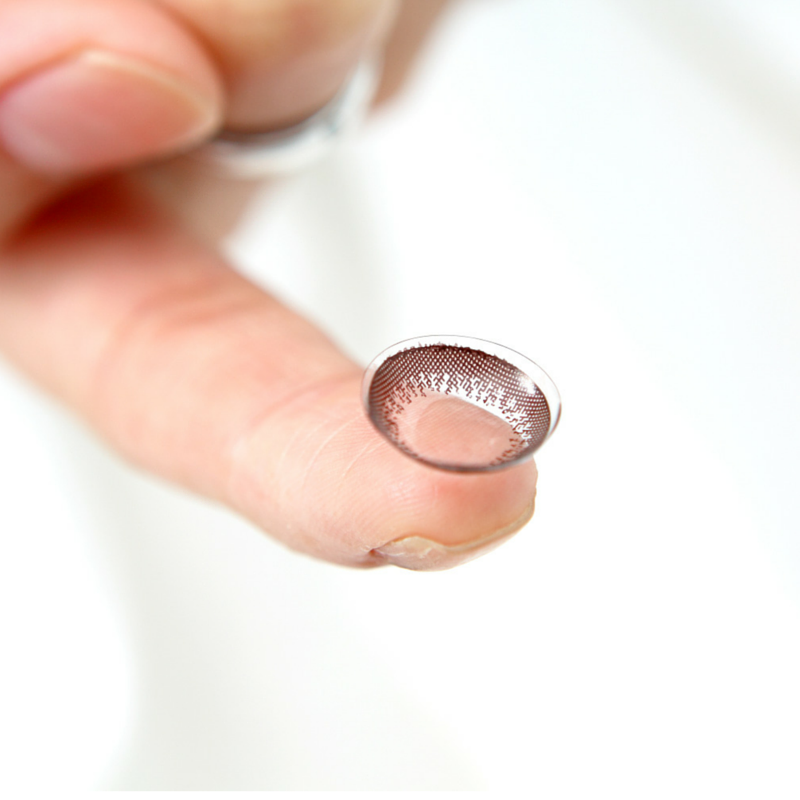
Did you know that the FDA considers all contact lenses medical devices and a prescription is required for the sale of all contacts? All contact lenses require a valid prescription. This is whether they are for correcting your vision or for decorative purposes like changing your eye color. There is no such thing as “over-the-counter” contact lens, or at least not legally.

These decorative Halloween lenses are truly scary! Be wary of non-prescription decorative contact lenses as part of your Halloween costume. Not only are these illegal, they can be incredibly damaging to your eyes. They can cause serious health issues such as infection, and are harmful to your vision. These contacts aren’t guaranteed to meet U.S. standards for toxicity, oxygen or water transmission requirements. They’re also not fitted to you as prescription contacts would be by your eye care professional. Dr. Jeffrey Walline, O. D. Ph. D., and Chair of the AOA’s Contact Lens & Cornea Section says, “This makes these lenses extremely dangerous to even try for a short period of time, including, for example, a Halloween party.”

A study published in the September 2015 issue of Eye & Contact Lens: Science & Clinical Practice, detected unsafe and unregulated chemicals in these non-corrective colored lenses. “When purchased over-the-counter, decorative contact lenses can put people at risk for bacterial infections, allergic reactions, or even significant damage to the eye’s ability to function, with the potential for irreversible sight loss. Sadly, numerous cases of serious harm have been documented,” adds Dr. Glenda Secor, O.D., past chair of the AOA’s CLCS.

It’s not worth your vision to have cat or zombie eyes for one night! Don’t let your friends wear these scary non-prescription lenses either. Help us spread the word!

Visit www.contactlenssafety.org or www.aoa.org for more information.

World Sight Day 2015 awareness

World Sight Day Awareness

4 out of 5 blind people are needlessly so. Many times blindness is avoidable with proper care, protection, or early detection of issues.

Today, Thursday October 8th is officially World Sight Day (WSD). It’s not necessarily meant to be a global day of celebrating sight, it’s more about how not everyone is fortunate enough to have sight or to even have the opportunity to correct vision impairment. Per the International Agency for the Prevention of Blindness (IAPB), “World Sight Day is an annual day of awareness held on the second Thursday of October, to focus global attention on blindness and vision impairment.”

2015 is the third year the WHO Global Action Plan and IAPB encourages their members and partners to continue with the theme of “Universal Eye Health.” This year, the “Call to Action” for World Sight Day is “eye care for all.” Everyone deserves the access to preventative eye care and the chance to have their vision corrected!

The key messages for WSD awareness from IAPB are as follows:

  • Approximately 285 million people worldwide live with low vision and blindness
  • Of these, 39 million people are blind and 246 million have moderate or severe visual impairment
  • 90% of blind people live in low-income countries
  • Yet 80% of visual impairment is avoidable – i.e. readily treatable and/or preventable
  • Restorations of sight, and blindness prevention strategies are among the most cost-effective interventions in health care
  • The number of people blind from infectious causes has greatly reduced in the past 20 years
  • An estimated 19 million children are visually impaired
  • About 65 % of all people who are visually impaired are aged 50 and older, while this age group comprises only 20% of the world’s population
  • Increasing elderly populations in many countries mean that more people will be at risk of age-related visual impairment.

IAPB is sponsoring an #EyeCareForAll Photography competition this year. Read more about entering the competition and the great prizes.

eye disease macular degeneration

Age-Related Macular Degeneration Awareness Week

Our eyes matter. It’s the truth and it’s also the theme of AMD Awareness Week. AMD stands for Age-related Macular Degeneration. Here are the facts about AMD.

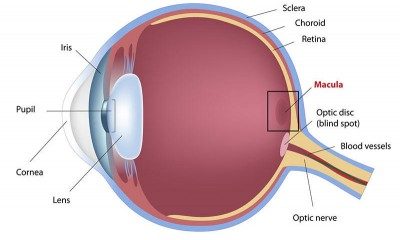
Age-related Macular Degeneration is an eye disease that is the leading loss of vision for people age 50 and older. Now it doesn’t necessarily cause complete blindness since it affects the macula in the center of your eye. The macula is a small spot near the center of your retina. This is where you have the sharpest vision. AMD can cause a blind spot or blurriness which can affect your ability to see, read, perform tasks, or drive.

Age-related Macular Degeneration is more likely to occur after 60 years of age. Other factors are smoking, race, high blood pressure, high cholesterol, obesity, poor diet and high sun exposure. Smoking has been shown to double the risk of AMG. Caucasians have a higher incidence of AMD. It is genetic so if your family has a history of AMD, you should have regular comprehensive eye exams.

AMD can be diagnosed by regular eye exams. Early diagnosis can help prevent or reduce loss of vision. The early stages of AMD may have little to no symptoms so it’s important to see your eye doctor. Symptoms may not occur until later stages of the disease or becomes noticeable when vision in one or both eyes are affected.

For more information about age-related macular degeneration and info about treatment, visit the National Eye Insitute. 

Envision Eyecare eye health for seniors

Envision Participating in YMCA Western NC Fit After 50

The YMCA of Western North Carolina will be hosting the Fit After 50 Day and Envision Eyecare is participating! Be sure to come out to the Reuter Family YMCA in Asheville on Saturday, September 19th from 12 noon-4 pm. Stop by and see the Envision Eyecare team at our booth! Our team will be giving vision and Glaucoma screenings, as well as passing out information on protecting your eye health.

There will be over 25 vendors, informative lectures, group ex try it classes, pickle ball, Flu vaccines, free health screenings, massage and more throughout the day.

The YMCA’s annual FIT AFTER 50 DAY is the kickoff event for Active Aging Week 2015.

Seminars Include:
12:15pm – Making Home Safer for Seniors
1:00pm – A Natural Approach to Preventing Cognitive Decline

Activities Include:
12:00pm – Water Fitness (Medium intensity)
12:00pm – Pickleball Clinic
12:30pm – Pickleball Play and Rock Climbing
12:45pm – Water Fitness (ROM)
1:30pm – Zumba Gold
2:45pm – Forever Fit

Our staff at Envision Eyecare hope to see you on September 19th! Visit the YMCA Fit After 50 page for more information.

The Next Best Thing To X-Ray Vision!

Superman had X-ray vision. You can have blue-ray vision. You blutechmight not be able to see through walls, but you’ll be able to see in the next few decades to come.

It’s been dubbed the “lens of tomorrow” by many and no wonder given the advancement in technology and the powerful protection it provides. For starters, you’ve most likely not heard of BluTech before and if you did then you’re definitely one of the few. With summer in full speed mode, this is something you’ll want to have in your “arsenal” to navigate your way through hot, humid, and bright adventures that still have your name written on them.

What is BluTech and what’s the big deal?

BluTech lens technology fits high-energy blue and ultra-violet light using ocular lens pigment derived from auto-oxidation of 3-hydroxykynureine (scientifically known as 3-OHKyn).  It is then combined with melanin and isolated in a durable material that is then used in an optical lens. This partnership allows the same protection for your eyes, contrast enhancement, and color perception to the eye as the natural coloration of the human crystalline lens.

So, what does that mean in laymen terms? We’re glad you asked. To keep it simple, these lenses not only help protect your eyes from the UV-rays but it also protects your vision from the electronic rays emitted from all the gadgets you carry around with you tethered on an invisible leash; think iPad, iPhone, Android, Laptop to label a few.

Why is it a good idea to consider getting BluTech lenses?

Given the fact you are exposed to “blue light” every day [think fluorescent lighting, electronic screens, [phones, tablets, computers, TV’s, etc], and the sum of them all emit damaging high energy blue light. With BluTech lenses, you are given an added extra layer of protection that goes a long way. Blue Lenses are barely noticeable with just a hint of tint to the lens.

*Note:  Those who are light-colored hair, eyes, and skin and those over the age of fifty are at high risk due to the insufficient amounts of protective pigments in the eye. Also, if you’ve had cataract removal surgery you are also at high risk.*

Contact Envision Eyecare to ask about BluTech Lenses. It will make a difference in protecting your precious sense of sight today and for all your tomorrows.

Importance of Back to School Eye Exams

back-to-school-kid3

Although it’s common to think of your GP when you think of back-to-school exams, making certain your child is scheduled for their annual eye exam is now right there at the top of the list.  According to reports, more than half the children who get labeled “problem learners” are actually not. These children genuinely are misdiagnosed, something a routine exam could fix.


Often times a child’s lack of participation or initiation in the classroom can be the result of poor vision.  Children have a tendency to hold objects extremely close to their eyes or experience squinting to see the blackboard or prime candidates for an eye exam. Reports have already indicated one in every five children entering kindergarten walk into school with undetected vision problems.

With the challenges the children of today face, learn is already hard work, this is one area all parents can help that learning curve shorten just a little.

Some signs parents can watch for are:

  • In ability to read a few sentences at a time without tearing
  • Squinting constantly
  • Holding objects extremely close to the face
  • Reading letters and numbers backwards or out of place
  • Physical complaints of headaches or eye aches
  • Losing their place when reading lines in a book
  • Constantly having to sit up close to the TV at home or in the first row in school
  • Covering one eye to read the board or watch TV
  • Difficulty with sports


These are just a few of the common signs your child most likely is experiencing some vision issues. A quick call to your eye doctor, schedule an appointment and you are well on your way to empowering your child’s learning experience.  With children being misdiagnosed with ADD, due to undetected vision challenges, it’s always best to be safe than sorry.

Have you scheduled your child’s eye exam for the upcoming year?

CONGRATULATIONS Dr. Melanie Denton

ostella bistroAs with all things in life, great things come to transition; not necessarily an end. On that note join us in saying…

CONGRATULATIONS to Dr. Denton!

It is with great pride we announce Dr. Melanie Denton will be leaving Envision Eyecare. Dr. Denton’s excellent care over the past three years at our office has touched many in our community and helped to make a difference in providing you with excellent patient care.

Please join us as we wish her the best as she begins the next phase of her journey at her new practice outside of Charlotte, NC. She will be missed.

Dr. Denton’s departure will be followed by the arrival of Dr. Sarah Arnette, OD, who comes to us from Virginia with five years’ experience. Dr. Arnette’s arrival ensures the continuity of Envision Eyecare’s commitment to community, connection and care.

10 Foods That Can Help Improve Your Vision

Hopefully most of us have made it through allergy season with our mental and well-being in tack – not to mention our visuals as well.  It’s been a rough road to recovery with piles of tissues, bottles of nasal sprays, vials of lubricating eye drops for those dry eyes.  And as usual, the schedule for eye appointments always peaks right around allergy season time here at the office.
Your VisionIf there is one thing we locals in Asheville know is one the best remedies for combating allergies, it’s the fact you must eat the local honey!  It’s pretty much common knowledge the local honey infuses your body with the necessary antibiotics to fight off or minimize allergies. Isn’t it funny how we’re quick to access this local wisdom when it comes to something as common as allergies, but when it comes to knowing what you can eat to prevent dry eyes, macular degeneration and even cataracts not so much?

Most of the time we don’t really give much thought to our vision until something goes wrong.  Given the fact we’re living in an age of “information overload,” life has become very busy. Sometimes we’re not aware something is broken or not operating properly until the warning signals start to beep and go off. In the world of eye health care that would be blurry vision, headaches and/or watery eye symptoms. Yet, much of what we see can be prevented or kept at bay with one simple step.

WATCH WHAT YOU EAT.

One powerful and simple step you can take in protecting your precious sense of sight is by taking mindful steps around your diet; watch what you eat. We don’t often connect the dots between our vision and what we had for breakfast, lunch or dinner but we should.  When we bring a sense of intention to what we eat, we empower ourselves to better care for our vision long before a visit to the eye doctor is required.

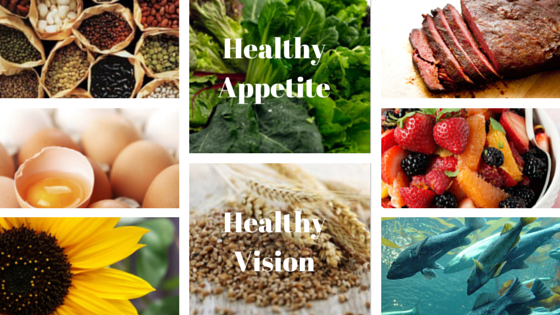
So, we thought we’d give you a hand by providing you a quick “check list” of foods that are powerful health agents and high in antioxidants. This way the next time you’re out to grab a bite to eat or you’re at the grocery store shopping for your weekly meal plans, you’ll have a head start on what to include on your food list.


Fish
Cold-water fish such as salmon, tuna, sardines and mackerel are rich in omega-3 fatty acids, which may help protect against dry eyes, macular degeneration and even cataracts. If you don’t eat seafood, you can get a good supply of omega-3s by using fish oil supplements or taking vegetarian supplements that contain black currant seed oil or flaxseed oil.

Leafy Greens
Spinach, kale and collard greens, to name just a few, are packed full of lutein and zeaxanthin, important plant pigments that can help stem the development of macular degeneration and cataracts. Broccoli, peas and avocados are also good sources of this powerful antioxidant duo.

Eggs
The vitamins and nutrients in eggs, including lutein and vitamin A (which may protect against night blindness and dry eyes), promote eye health and function.

Whole Grains
A diet containing foods with a low glycemic index (GI) can help reduce your risk for age-related macular degeneration. Swap refined carbohydrates for quinoa, brown rice, whole oats and whole-wheat breads and pasta. The vitamin E, zinc and niacin found in whole grains also help promote overall eye health.

Citrus Fruits and Berries
Oranges, grapefruits, lemons and berries are high in vitamin C, which may reduce the risk of cataracts and macular degeneration.

Nuts
Pistachios, walnuts, almonds — whichever type tickles your fancy — are rich in omega-3 fatty acids and vitamin E that boost your eye health.

Legumes
Kidney beans, black-eyed peas and lentils are good sources of bioflavonoids and zinc — and can help protect the retina and lower the risk for developing macular degeneration and cataracts.

Fish Oil, Flaxseed Oil and Black Currant Seed Oil
These super supplements contain omega-3 fatty acids and have many eye health benefits, including helping to prevent or control dry eye syndrome as well as reduce the risk of macular degeneration and cataracts.

Sunflower Seeds
Help keep your eyes healthy and disease-free by snacking on sunflowers seeds, which are excellent sources of vitamin E and zinc.

Beef
In moderation, lean beef in your diet can boost your eye health. Beef contains zinc, which helps your body absorb vitamin and may play a role in reducing risk of advanced age-related macular degeneration.